A Guide to Your Soil Functionality Analysis Report
A Soil Functionality Analysis report shows much more than nutrient levels. It shows how well your soil is actually working for your farm.

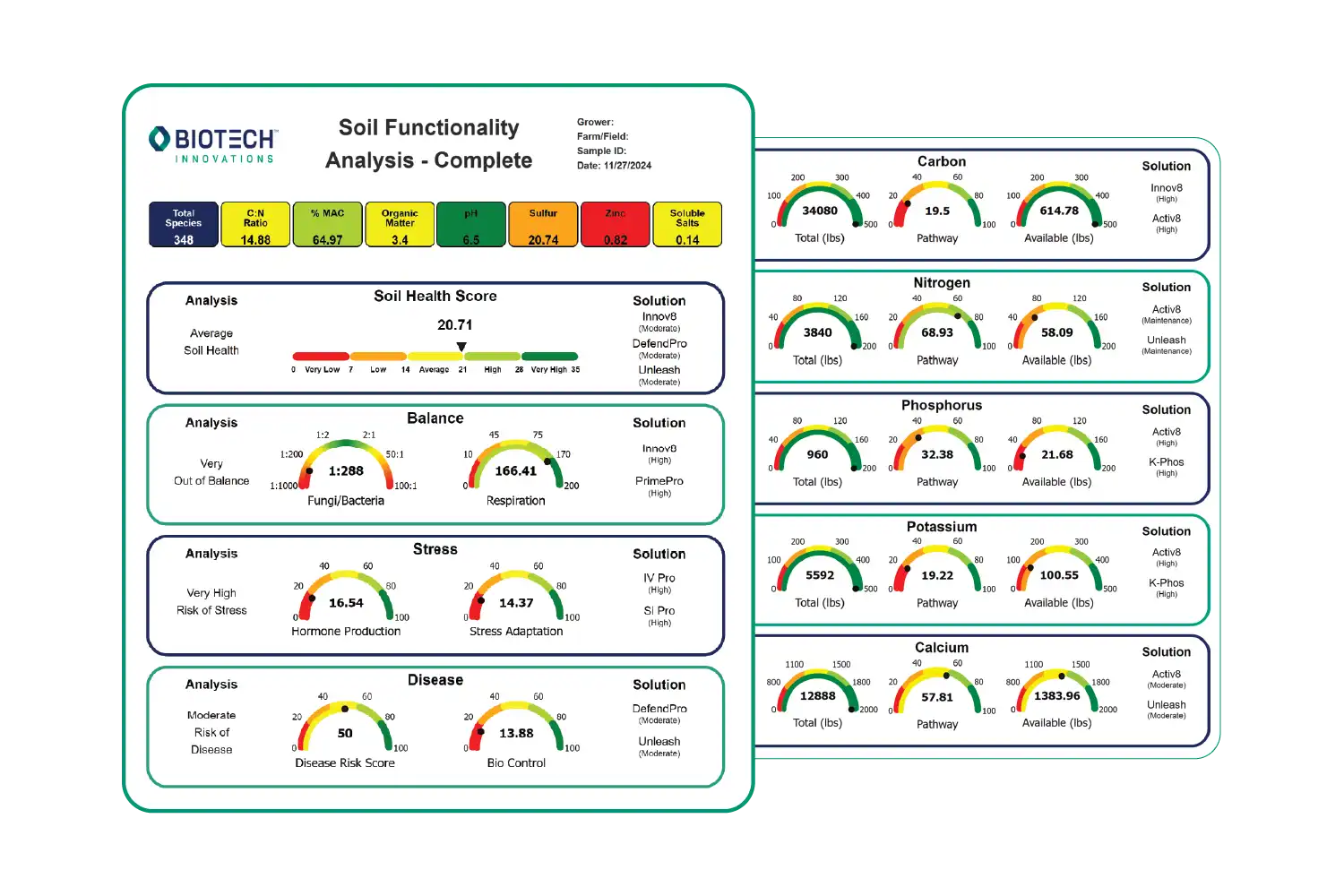

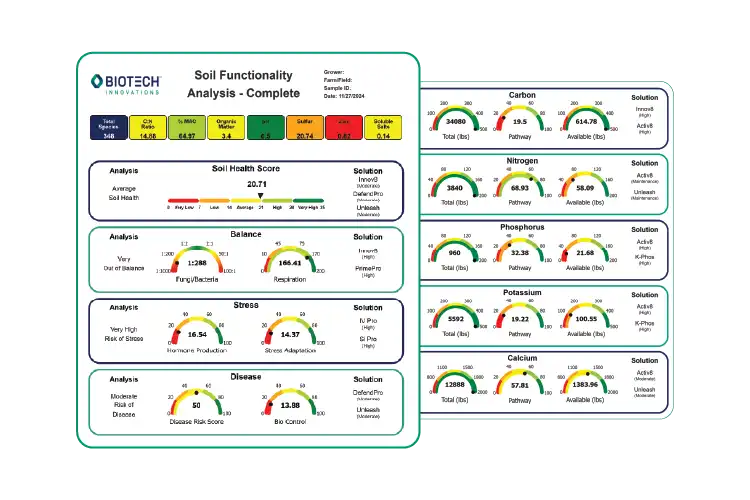
You received your Soil Functionality Analysis (SFA) report. Now what? Rather than only tell you what’s present in your soil, the SFA helps your Biotech Innovations dealer evaluate how well the biological system beneath your crop is functioning. Let’s explore the report and discover what each measurement can tell you about your farm.
Traditional soil testing remains an important part of making fertility decisions. It can tell you how much phosphorus, potassium, and other nutrients are present and help determine what you may need to apply. But nutrient inventory is only part of the story.
Imagine your soil contains plenty of phosphorus, but your crop continues to show signs that it isn't getting enough. Which one is wrong: the crop or the soil test?
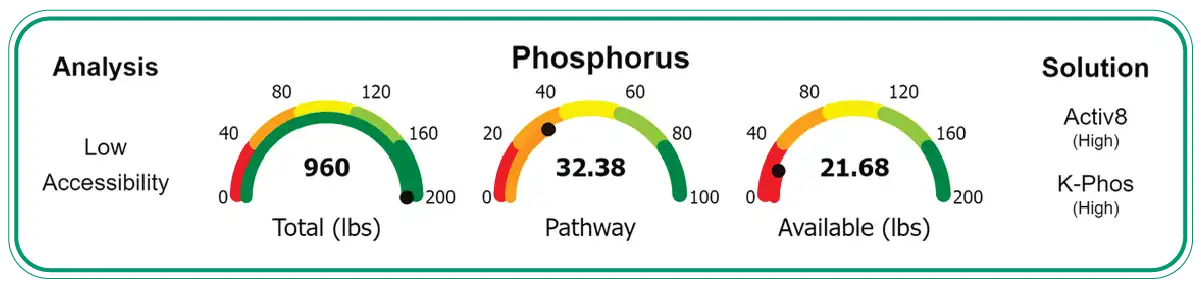
Potentially, neither. The phosphorus can be present without being available to the plants. Before nutrients can reach your crop, bacteria, fungi, carbon, water, plant roots, and other parts of the soil system all have work to do.
That's the fundamental difference between the two tests:
A traditional soil test helps tell you what's in your soil. An SFA report helps explain whether the system responsible for putting those resources to work is functioning.
And because every part of that system is interconnected, your Biotech Innovations dealer doesn’t evaluate any single SFA measurement by itself. However, to give you an idea of what the SFA report measures, let’s start at the top and work our way through the various data points.
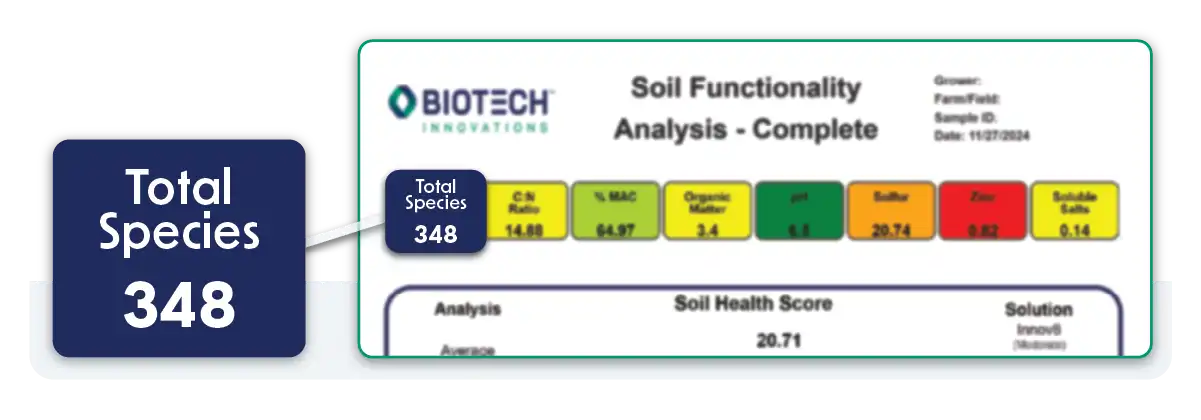
The first measurement on the SFA Report is Total Species.
Why do you want to know the total number of microbiology species in your soil sample? Because different microorganisms perform different jobs beneath your crop.
Think about your hometown. A functioning community needs a diverse group of people and services. You need a grocery store, hospital, school, and post office. A functioning community needs mechanics, contractors, and countless other services. A town populated entirely by 5,000 dentists wouldn’t function very well, even if there were plenty of teeth to work on.
Your soil works in a similar way. Different species of bacteria, fungi, and other microorganisms contribute different biological functions. At Biotech Innovations, higher species counts indicate greater biological diversity, while low counts can suggest that portions of the biological community have become compromised.
Total Species therefore starts us with an important question:
Does your soil have a diverse enough workforce to perform all the jobs your crop needs?
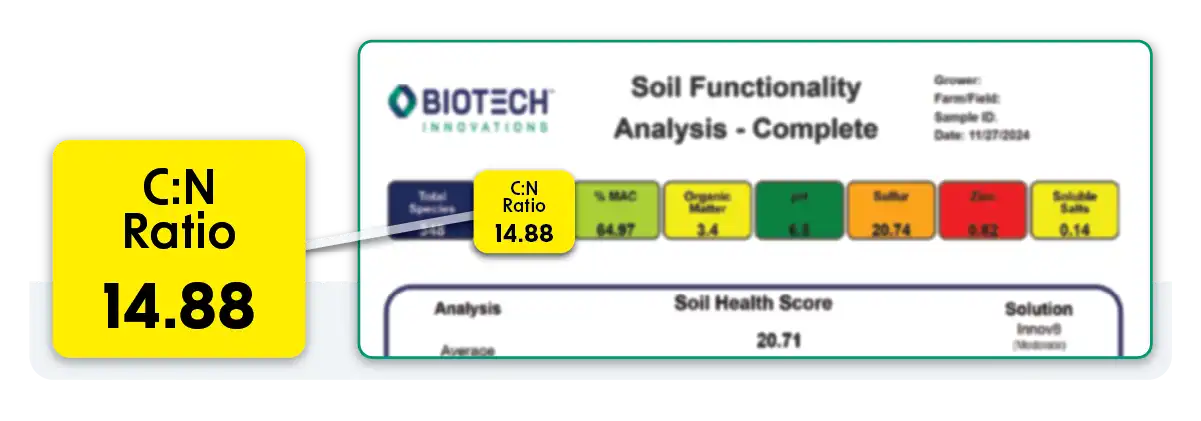
The carbon-to-nitrogen ratio compares the amount of carbon in your soil with nitrogen. Soil organisms require both elements in an acceptable ratio to function efficiently.
At Biotech Innovations, we generally consider a C ratio between approximately 10:1 and 12:1 to be a healthy functional range. A ratio that moves too far out of balance can affect residue decomposition, nitrogen availability, and the overall efficiency of nutrient cycling.
But just like every other number on your SFA, the C ratio isn’t a diagnosis by itself. It's one clue that becomes more useful when compared with the carbon and biological measurements that follow.
Read More: Release More Nitrogen with a Healthy Carbon-to-Nitrogen Ratio
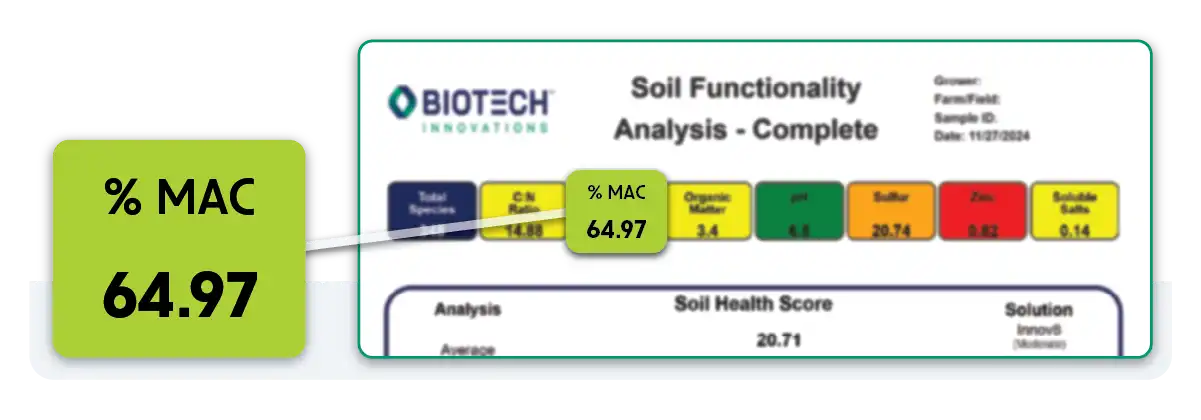
Your soil may contain a large amount of carbon, but not all of it is immediately useful to microorganisms.
Microbially active carbon (MAC) represents the carbon that can serve as food and energy for the biological community.
That matters because microorganisms need energy to perform their jobs. They can't efficiently break down residue, cycle nutrients, build fungal networks, or support other biological processes if they're running out of fuel.
Biotech Innovations looks closely at MAC because it ties directly into other measurements in the report, particularly respiration. When MAC is low, biological activity often suffers as well. Think of MAC as answering another straightforward question:
Does your biological workforce have enough energy to work?
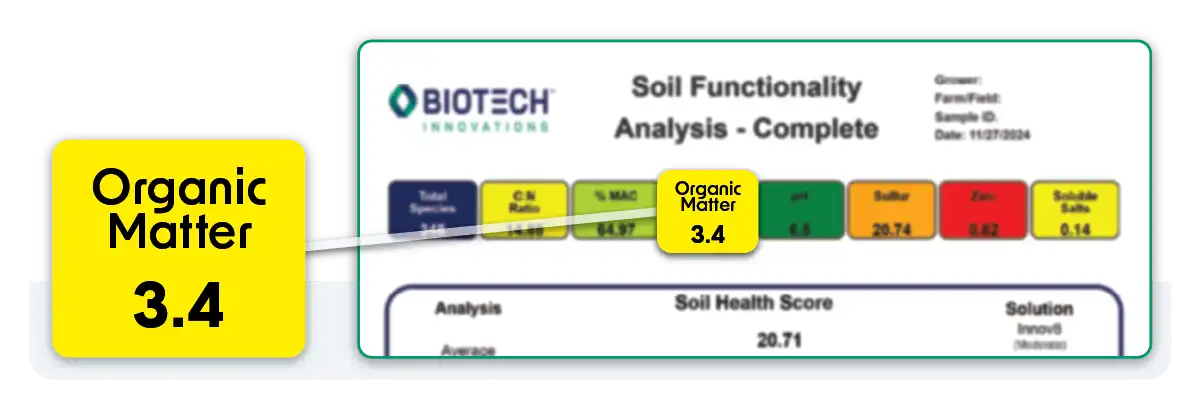
As plants grow, microorganisms cycle carbon through the soil. Plant residue, root material, microbial biomass, and other organic materials can eventually contribute to the organic matter pool.
That’s why we don't look at organic matter independently from C ratio or microbially active carbon.
Biotech Innovations reads these measurements together: C ratio → MAC → organic matter. A field with very low organic matter, low MAC, poor C balance, and weak species diversity is telling a very different story from a field where those measurements are all functioning well.
Organic matter is therefore another chapter in the larger carbon story.
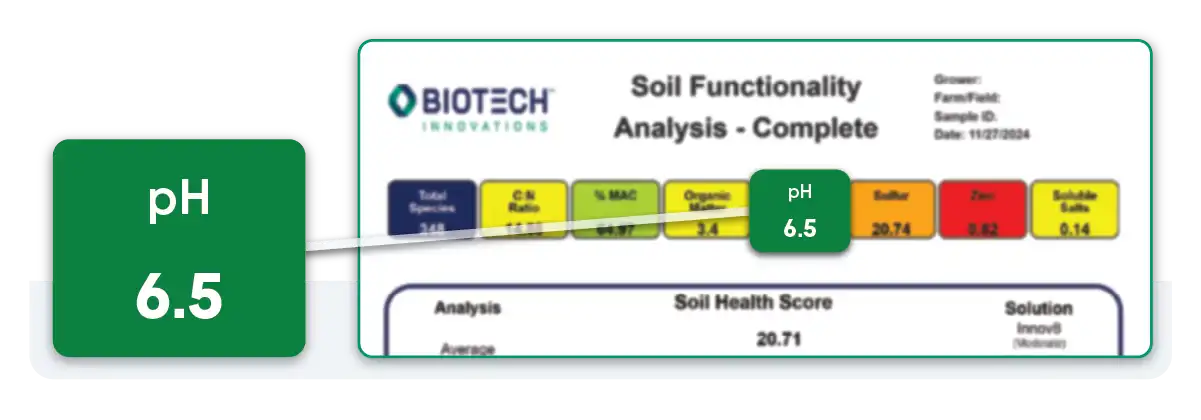
Farmers are accustomed to thinking about pH as a measurement of acidity or alkalinity, but within the SFA, it also provides context for the environment where nutrient cycling and biological processes are occurring.
pH is related to hydrogen activity in the soil, and hydrogen participates in the processes involved in plant growth and nutrient movement. Different biological and chemical functions perform differently as that environment changes.
Your Biotech Innovations dealer therefore considers pH as another piece of the overall system rather than treating it as an isolated soil-health score.
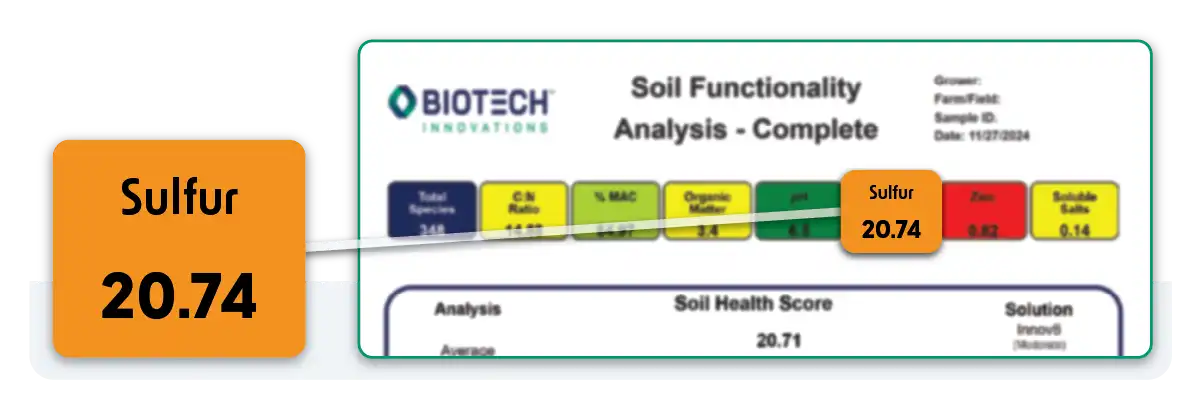
Sulfur appears prominently near the top of the SFA because Biotech Innovations has found it can provide another useful clue about overall pathway health.
Your crop requires much less sulfur than major nutrients such as nitrogen, but that doesn't mean sulfur isn't important.
Biotech Innovations commonly sees available sulfur levels remain low when the biological and carbon pathways in a field aren't functioning efficiently. As those larger functions improve, particularly MAC, respiration, and the carbon pathway, we often see available sulfur improve as well.
That means a low sulfur result doesn't automatically lead us to recommend more sulfur. Instead, your dealer will also ask whether something upstream in the biological system is limiting sulfur availability.
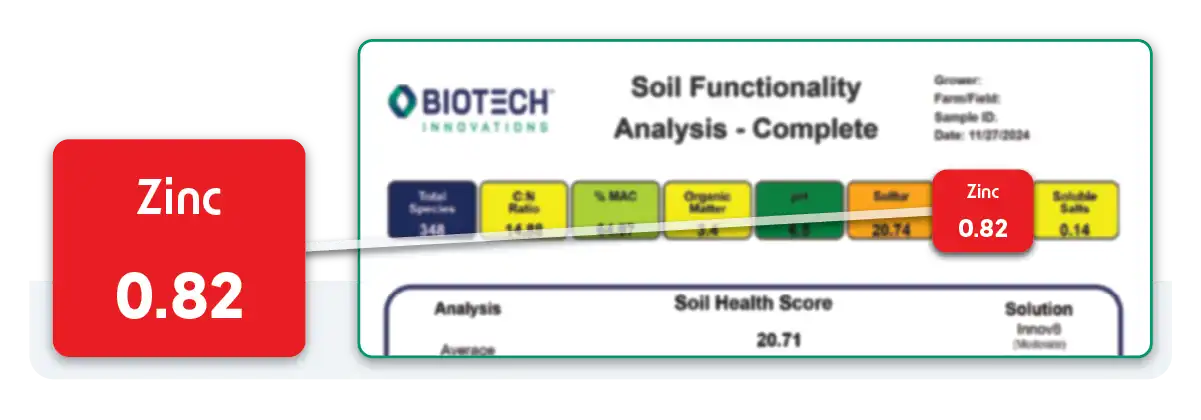
Zinc serves a similar role on the SFA. Plants need zinc in relatively small quantities, but available zinc often shows up low when biological functions elsewhere in the report are compromised.
As carbon pathways and microbial activity improve, Biotech Innovations has observed available zinc levels increase as well. That makes zinc another good example of why the SFA focuses on function rather than deficiency.
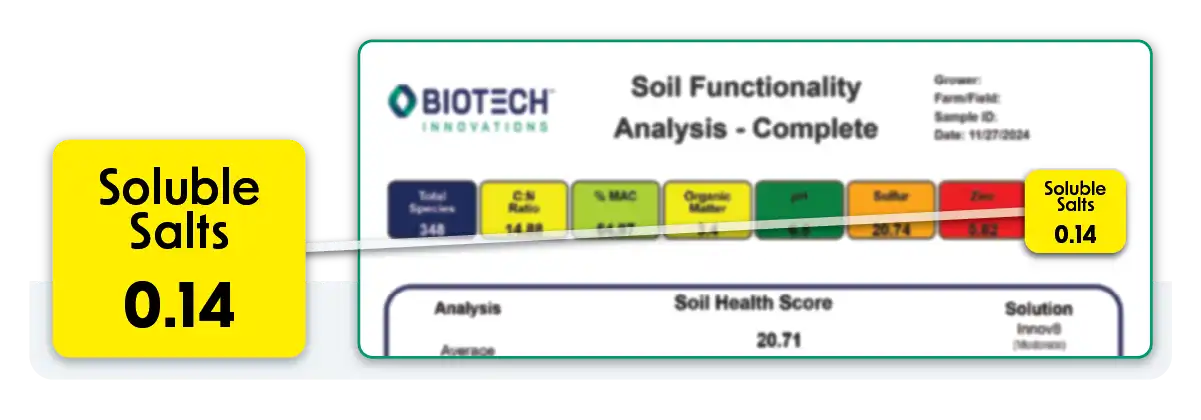
Soluble salts measure the overall concentration of dissolved salts in your soil, including forms of nutrients such as nitrogen, potassium, calcium, magnesium, and sulfur.
When soluble salt levels become too high, they can create stress for germinating seedlings and make it more difficult for plant roots to take up water and nutrients. High salt levels can also suppress microbial activity, potentially affecting the biological functions measured elsewhere on the SFA report.
That’s why your Biotech Innovations dealer considers soluble salts alongside the other SFA measurements. Elevated levels may be especially important following heavy fertilizer or manure applications or in fields prone to saline conditions.
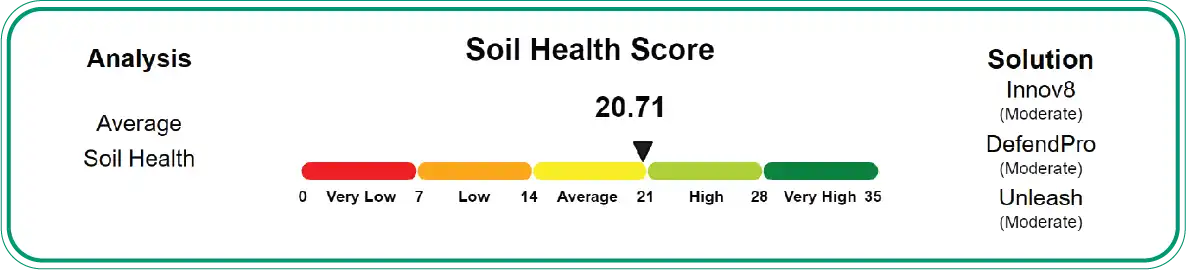
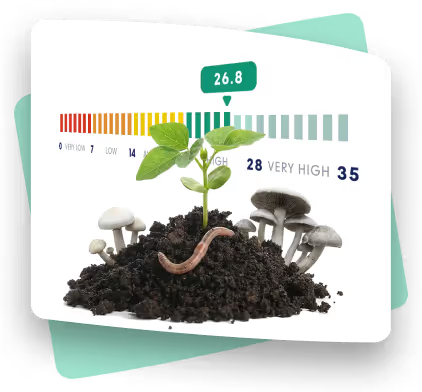
The Soil Health Score gives you a quick snapshot of your soil’s condition. It's a calculated result based on what's happening elsewhere in the report. For example, weak microbially active carbon, low respiration, and an extreme fungi-to-bacteria imbalance will ultimately be reflected in the Soil Health Score.
Think of it like the final score of a ballgame. The score tells you how things turned out for a particular test. If you want to understand why, you have to look at what happened during the game.
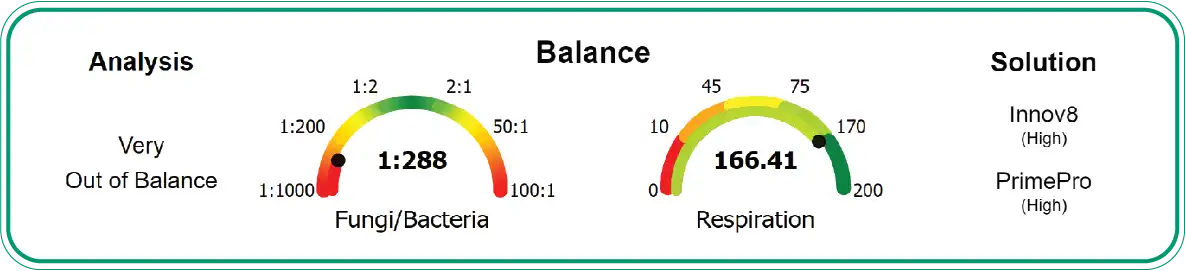
The Balance portion of the SFA examines two especially important pieces of the biological system: fungi-to-bacteria balance and respiration.
Biotech Innovations commonly sees agricultural soils with plenty of bacteria but comparatively weak fungal populations.
That matters because the two groups perform different jobs. Bacteria help process and release nutrients, while fungi build extensive networks that help move those nutrients through the soil toward plant roots.
Respiration then gives us another clue: Is that biological community actively working?
When microorganisms consume available carbon, they respire and release CO₂. Measuring that respiration helps Biotech Innovations evaluate the level of biological activity occurring in the soil.
Biotech Innovations generally sees stronger respiration when fungi and bacteria move toward better balance. When we see weak fungal populations, low respiration, and poor MAC together, we know the biological system needs attention.
Read More: Why Your Crop Needs the Right Balance of Fungi and Bacteria
Read More: How to Tell if Your Soil Is Working for Your Farm
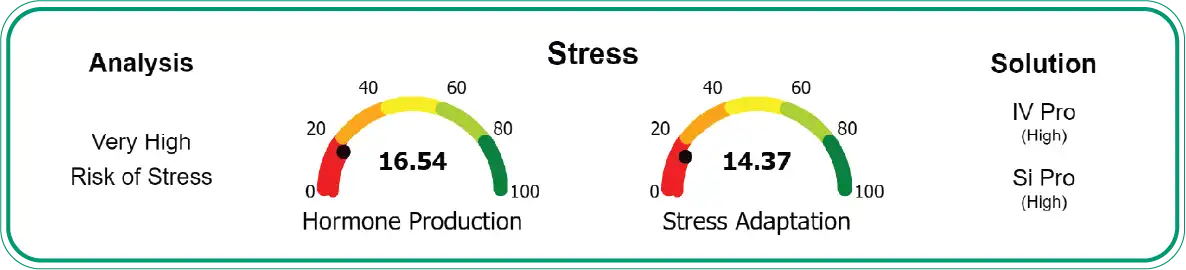
So far, in the SFA report sections we’ve discussed, we’ve concerned ourselves with what’s going on beneath the surface. The Stress section connects those underground conditions with the crop growing above them.
When biological balance and carbon function are compromised, Biotech Innovations expects the plant to have a harder time adapting to environmental stress. Problems such as out-of-balance fungi and bacteria counts and reduced hormone production can lead to increased stress.
Stress tolerance matters when your crop encounters heat, drought, nutrient limitations, or other challenges during the season. Better stress tolerance can help your crop push through the tough times.
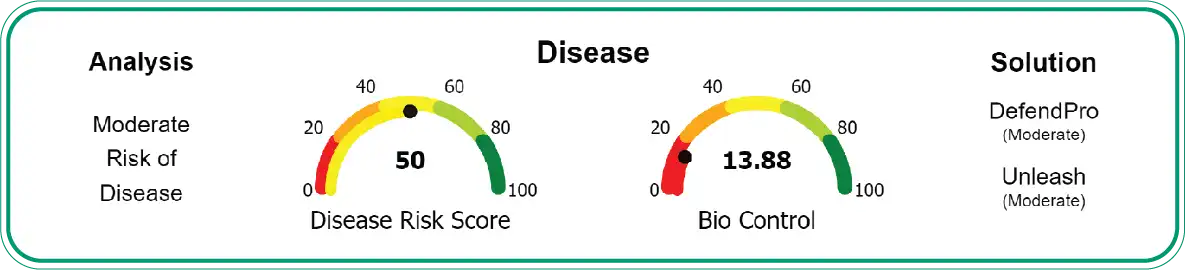
The Disease section evaluates another important part of biological function: biocontrol.Healthy soil contains organisms that help compete with, suppress, or defend plants against disease-causing organisms. Biotech Innovations wants to know whether those beneficial organisms are present.
When biological diversity and beneficial populations have been compromised, the crop can become more susceptible to fungal pathogens, nematodes, and other disease pressures. Biotech Innovations therefore looks at disease pressure as another potential symptom of an underlying biological imbalance—not simply as an isolated problem requiring another crop-protection application.
The goal isn’t to pretend crop-protection products are unnecessary. It’s to ask an additional question:
Why is your crop vulnerable to disease in the first place?
Read More: Can You Stop Crop Diseases Before You See the Symptoms?
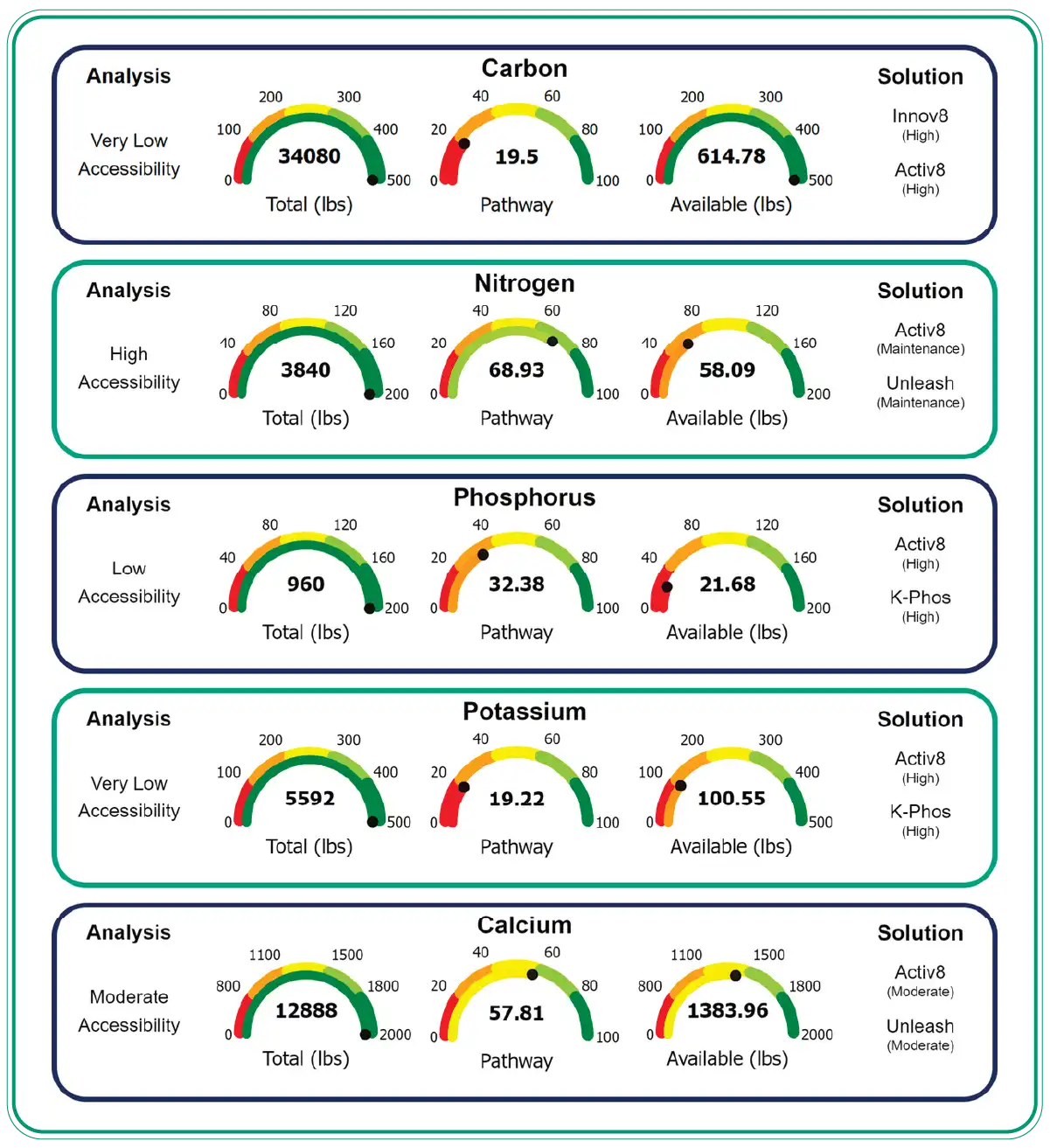
While total nutrient levels are important, Biotech Innovations wants to also understand the system responsible for delivering those nutrients before automatically recommending that you simply apply more and more.
The SFA’s nutrient page therefore gives you three important pieces of information:
Here’s why this distinction matters: A soil might contain more than 3,800 pounds of total nitrogen but have only 58 pounds available. Your immediate reaction might be, "I need more nitrogen."
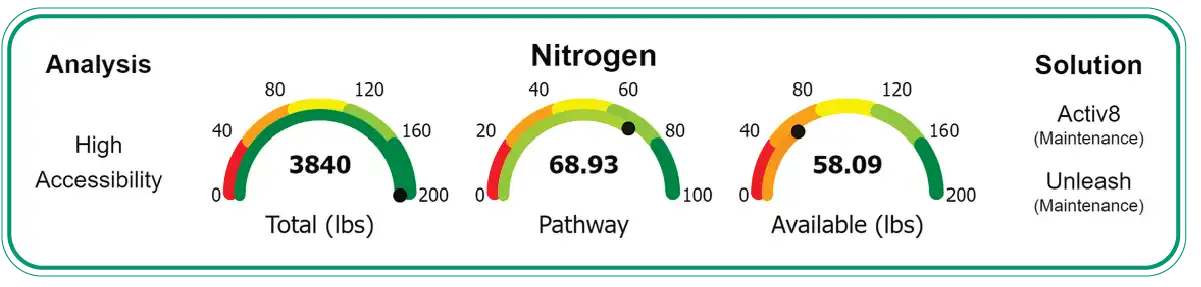
Biotech Innovations asks a different question: Why is so little of the nitrogen already in the field becoming available? If pathway health is poor, simply increasing the total nutrient pool may not solve the underlying problem.
That's why your Biotech Innovations dealer looks closely at pathway health for nitrogen, phosphorus, potassium, and calcium. Total levels are often adequate while available levels remain low because the biological pathways needed to make those nutrients plant-available are disrupted and not functioning as well as they could.
Read More: Why Your Crop Can’t Use the Nutrients Already in Your Soil
If there's one thing to remember as you look through your SFA report with your Biotech Innovations dealer, make it this:
Everything is connected.
A low zinc number might lead us back to weak carbon pathways. Low respiration may send us looking at MAC and fungal populations. High disease risk may connect with compromised biocontrol organisms and biological diversity. Poor phosphorus availability may have much more to do with pathway health than with the amount of phosphorus present.
Your dealer's job isn’t to identify the reddest number and sell you something to make it green. The goal is to understand your comprehensive soil health picture, why any red numbers are red, and what strategy or strategies you should consider to improve your soil health, the efficiency of your fertility program, and your yields.
Turn Your SFA Results Into a Management Strategy
Your Biotech Innovations dealer will help you work through the relationships among your results to identify the limiting factors within your soil system. Depending on what the report reveals, the strategy may involve:
The goal isn't simply to turn every red box green. The goal is to improve the biological function that number represents. And because every farm is unique, no two management strategies should be the same.
Biotech Innovations provides the Soil Functionality Analysis report at no cost through your local Biotech Innovations dealer. Once your results are available, your dealer will walk through the report with you, identify the areas that deserve attention, and help develop a strategy based on what your soil actually needs.
Instead of guessing which input your farm needs next, start by understanding the system. Together, we'll Unlock the Power in Your Soil.