A Guide to Your Soil Functionality Analysis Report
A Soil Functionality Analysis report shows much more than nutrient levels. It shows how well your soil is actually working for your farm.


Have you ever reviewed a soil test showing adequate nutrient levels, only to watch your crop struggle with deficiencies or disease later in the growing season? At first glance, this doesn’t make sense. But consider this: Your farm actually needs an entire system, not just nutrients, to transform your fertility program from an expense that just “banks nutrients” to an investment that drives your bottom line.
One of the biggest misconceptions about soil fertility is that your soil functions like a savings account. You fill the account with nutrients, and your crop can make withdrawals to grow. In reality, a bank account isn’t a good analogy for soil. It’s more accurate to think about your soil as a complex supply chain supplying your crop “factory.”
In reality, your soil contains nutrients in many different forms; only a portion of the nutrients in your soil are accessible to your crop at any given time. To continue the supply chain analogy, imagine the situation like this: Any factory may run into a situation where you have raw materials available but no trucking company available to deliver the materials when you need them. So, until you can solve this problem, production will slow down or stop.
Some nutrients are dissolved in soil water where roots can absorb them. Others remain tied up in crop residue, organic matter, soil minerals, or even inside living microorganisms. Until those nutrients are released and delivered to your plants, they’re unavailable, even though they're still present in your fields.

Roots don’t simply absorb nutrients from every inch of soil around them. Nutrients must first reach the root surface in a form the plant can use.
Healthy soil creates several pathways that make nutrient movement possible.
When these pathways are functioning well, nutrients move efficiently throughout the growing season. When pathways become disrupted, nutrients may remain in the soil while crops struggle to access them.
Nutrients don't disappear overnight. Just like the factory that doesn’t pay close enough to the health of its supply chain, pathway problems in your fields develop over time. Most often, nutrients become trapped within a soil system that isn’t functioning properly. Several factors can reduce nutrient availability for your crop:
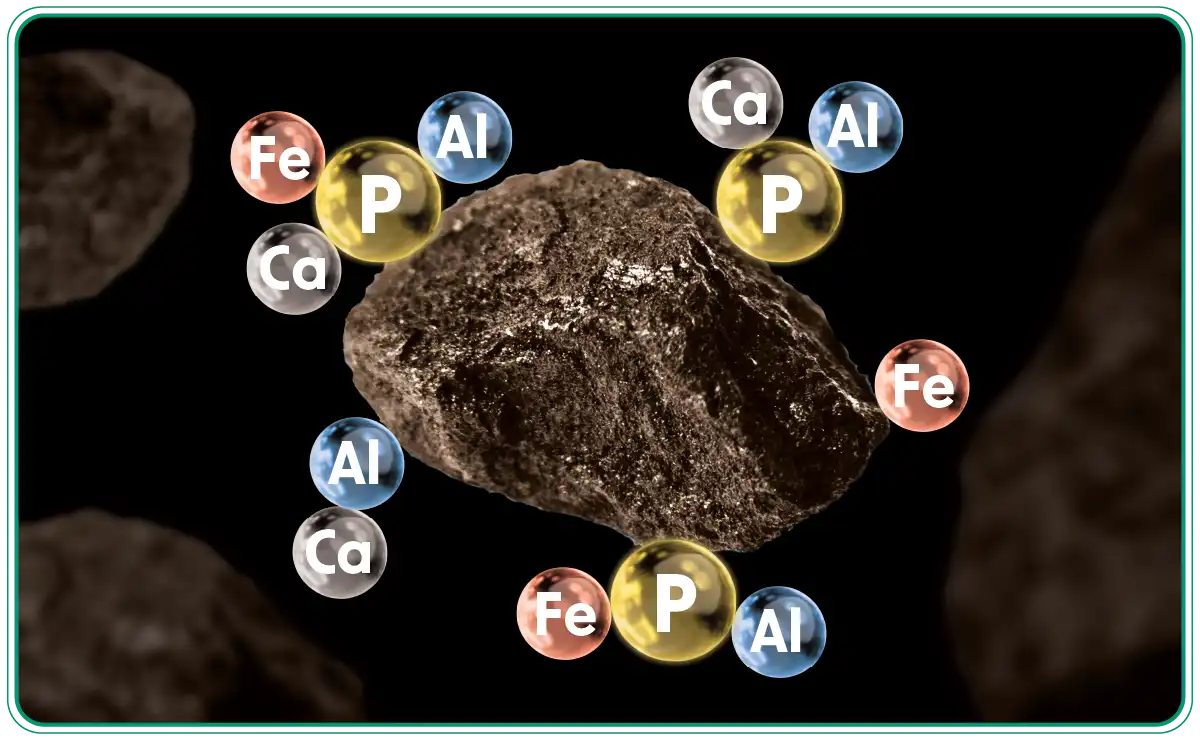
Some nutrients naturally react with other elements in the soil. Phosphorus, for example, can become tied up with calcium, iron, or aluminum depending on soil conditions. The phosphorus is still present, but much less of it is available for plant uptake.
Many nutrients rely on teams of microorganisms to process them before plants can use them. When microbial populations decline, nutrient cycling slows as well.
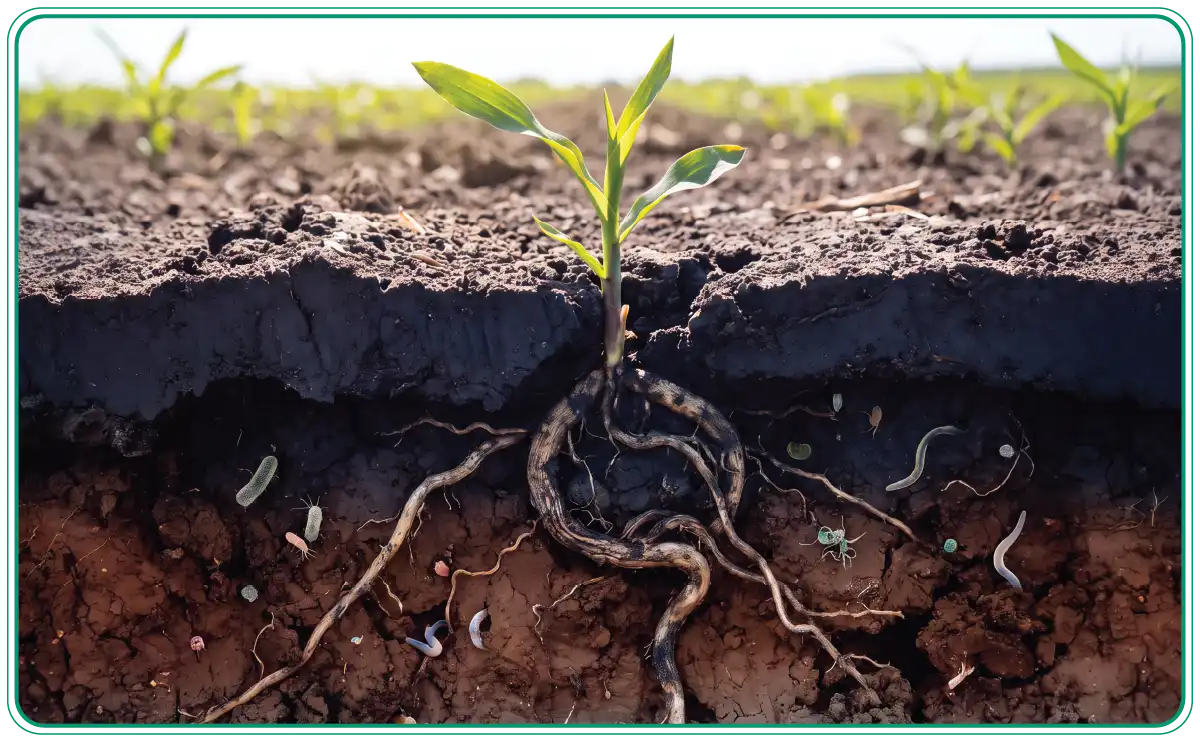
Compacted soils make it more difficult for roots, water, oxygen, and soil biology to move throughout the ground. Soil compaction reduces pore space, ruins healthy natural soil aggregation, and makes it harder for your plants’ roots to go exploring for nutrients.
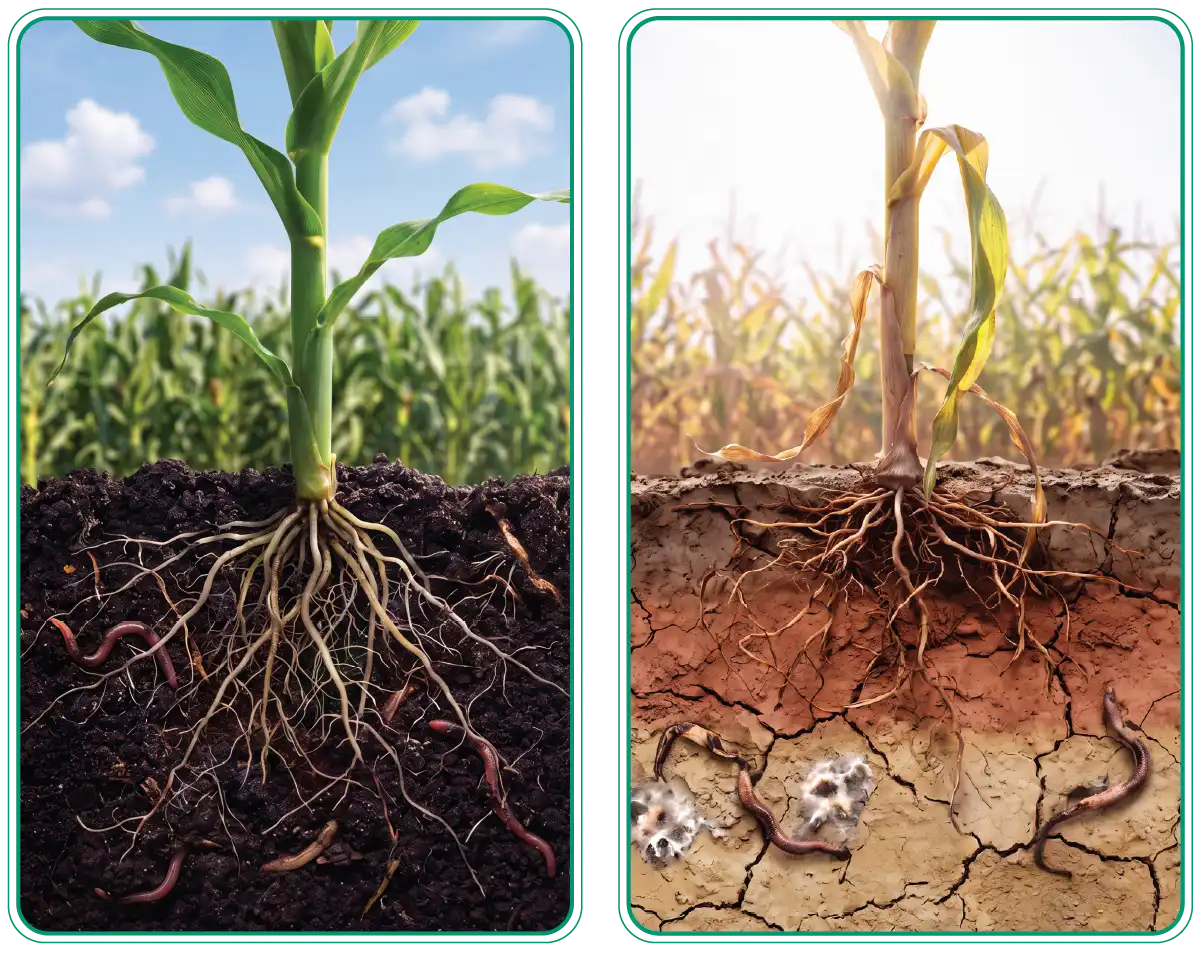
Temperature, moisture, oxygen levels, and soil pH all influence nutrient availability. That’s one reason crops may show nutrient deficiencies during stressful growing conditions even when soil tests indicate adequate fertility.
When tissue tests reveal deficiencies, it’s natural to assume the field simply needs more fertilizer. Sometimes that’s true. But if the real problem is poor nutrient movement, adding more fertilizer may only increase the amount of fertility already sitting in the soil. It’s like adding more raw materials to a distant warehouse without that transportation plan in place: they’re still not going to arrive on time for your factory to use them.
Healthy soil biology, good soil structure, and active nutrient cycling help maximize the return on every fertilizer dollar you invest. So, rather than focus only on nutrient supply, it’s equally important to evaluate how effectively nutrients are moving through your soil.
We’re not saying you don’t need to think carefully about your fertility program. You’re absolutely going to need to continue to apply fertilizer. However, if you help your soil function that way it was designed, you may be able to reduce the amount of fertilizer you apply.
Healthy soil supports nutrient movement by:
As soil function improves, nutrient cycling becomes more efficient, fertilizer performs better, and crops gain access to more of the fertility already present in the field.
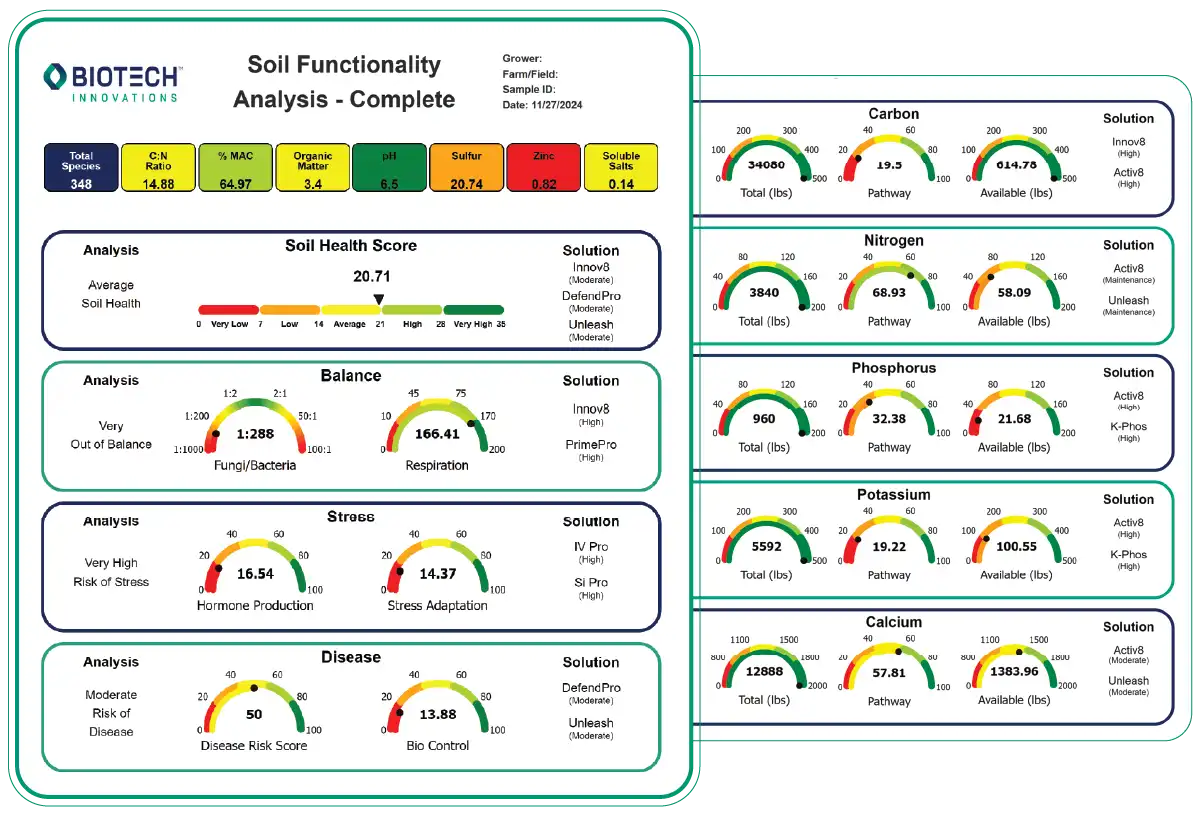
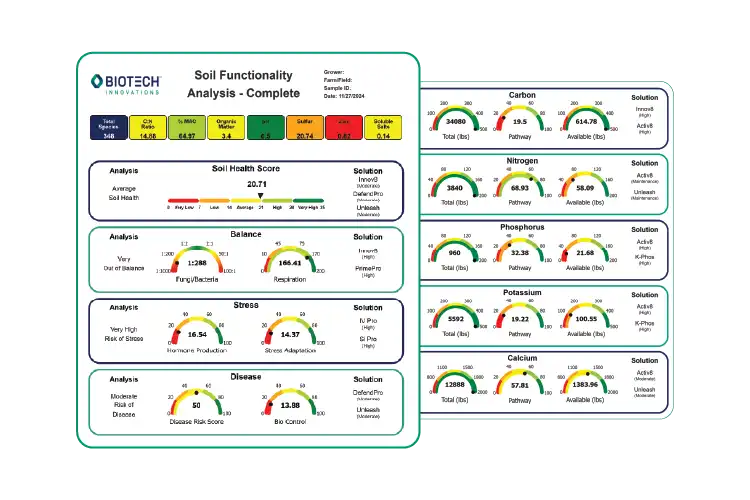
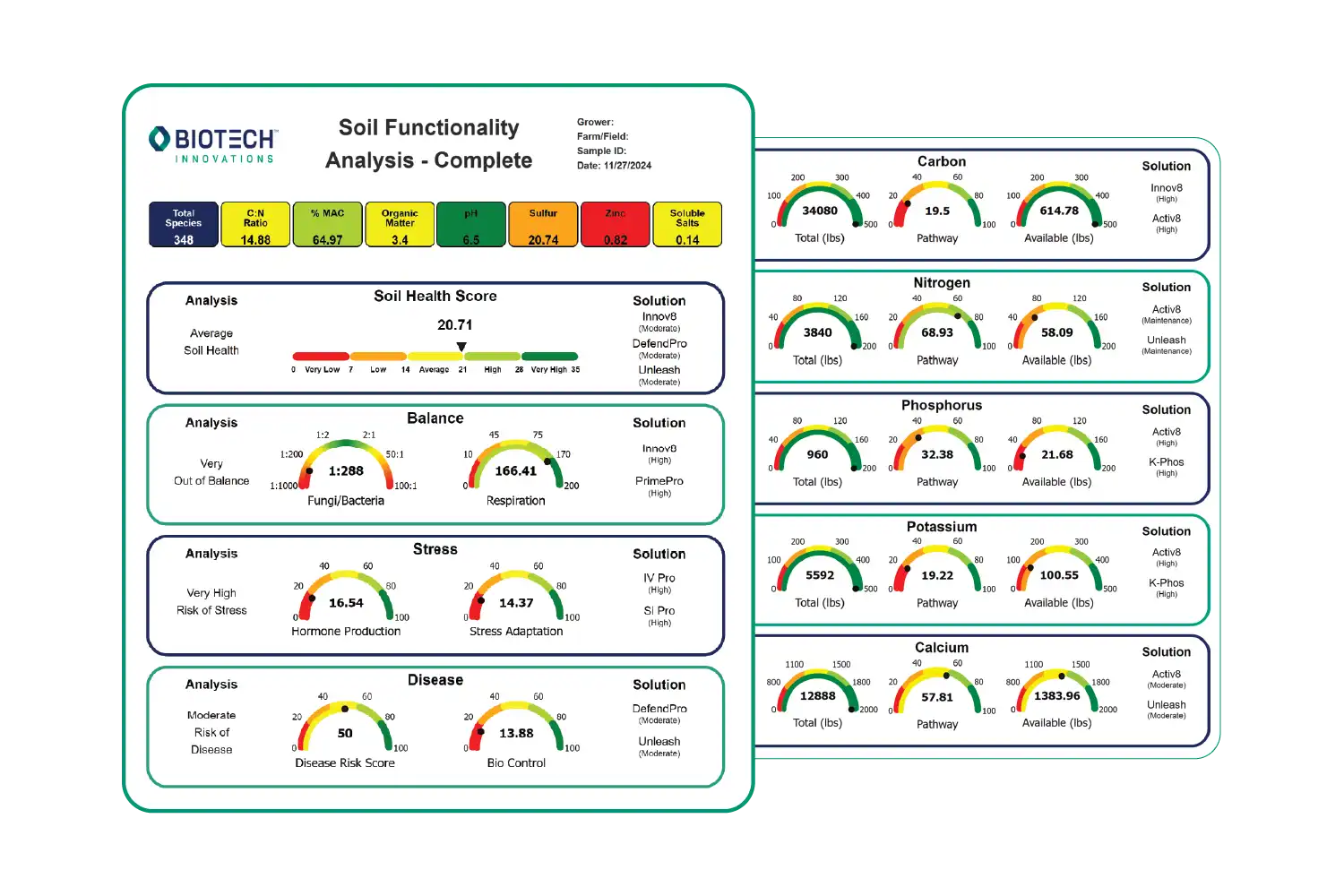
Traditional soil tests provide valuable information about nutrient levels. A Soil Functionality Analysis (SFA) Report from your Biotech Innovations dealer goes one step further by evaluating the biological processes responsible for moving nutrients through your soil and into your plants.
Understanding those processes helps identify opportunities to improve fertilizer efficiency, reduce unnecessary inputs, and build a healthier soil system over the long term. To borrow our factory analogy again, an SFA report will point out the raw materials you have available and the health of your entire supply chain, including your transportation plan.
Read More: Why Modern Farming Practices Break Soil Function
Biotech Innovations’ products are formulated to address specific concerns within your farm’s “supply chain”: maybe you need to boost nitrogen-fixing bacteria in your soil so you can take better advantage of your yearly nitrogen investments. Or, maybe the number of “workers” in your soil focused on disease prevention and management is low.
This is why it’s important to help the overall soil system function more efficiently on your farm. Over time, supporting soil function may allow you to reduce unnecessary fertilizer applications by improving the efficiency of the nutrients you’re already applying. Biological products don’t replace fertilizer—they help restore the function of the living system already in your soil.
This process starts with a complimentary Soil Functionality Analysis (SFA) Report from your Biotech Innovations dealer. Together, we’ll identify opportunities to improve nutrient efficiency on your farm and build a healthier, more productive soil system to Unlock the Power in Your Soil.