A Guide to Your Soil Functionality Analysis Report
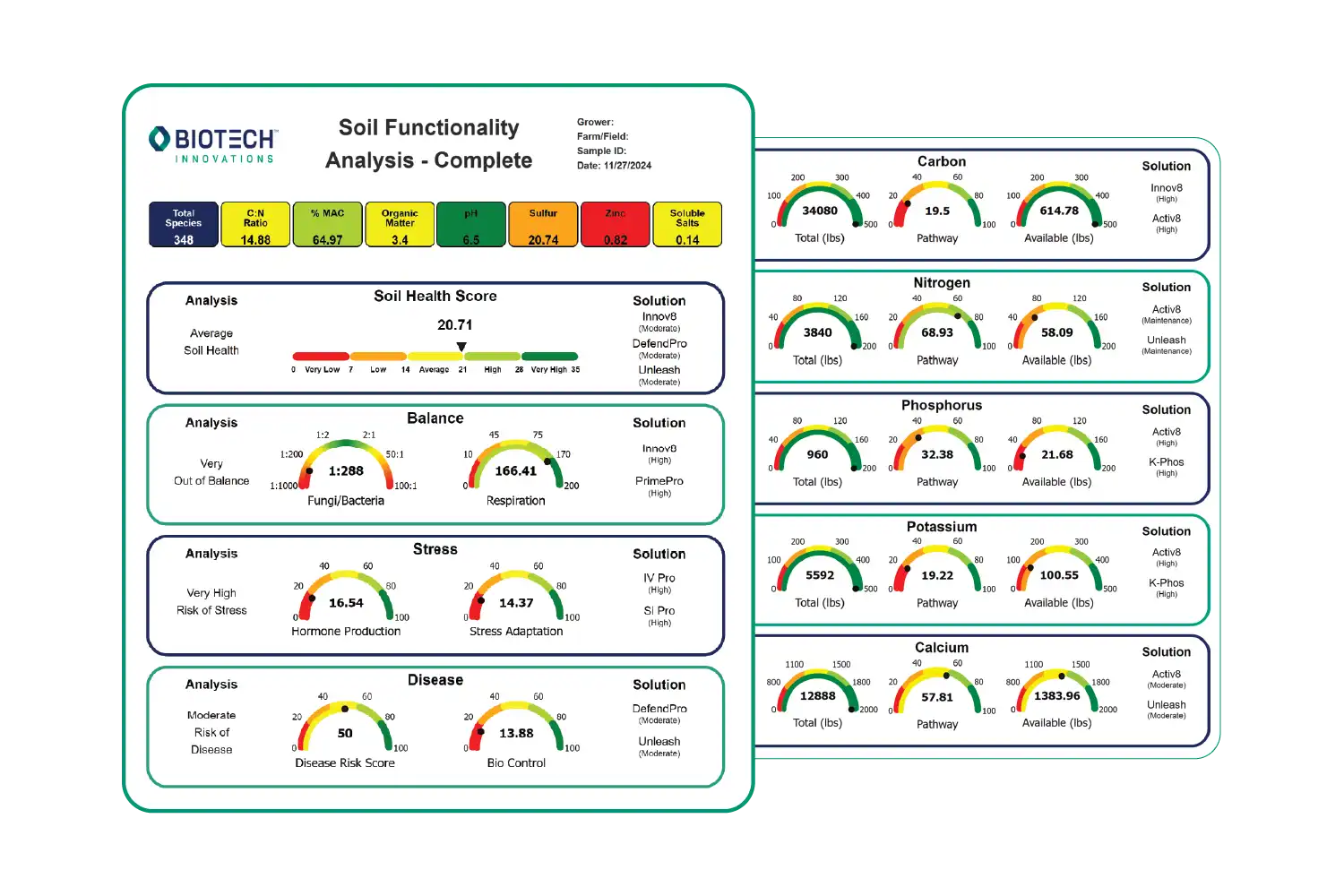
A Soil Functionality Analysis report shows much more than nutrient levels. It shows how well your soil is actually working for your farm.

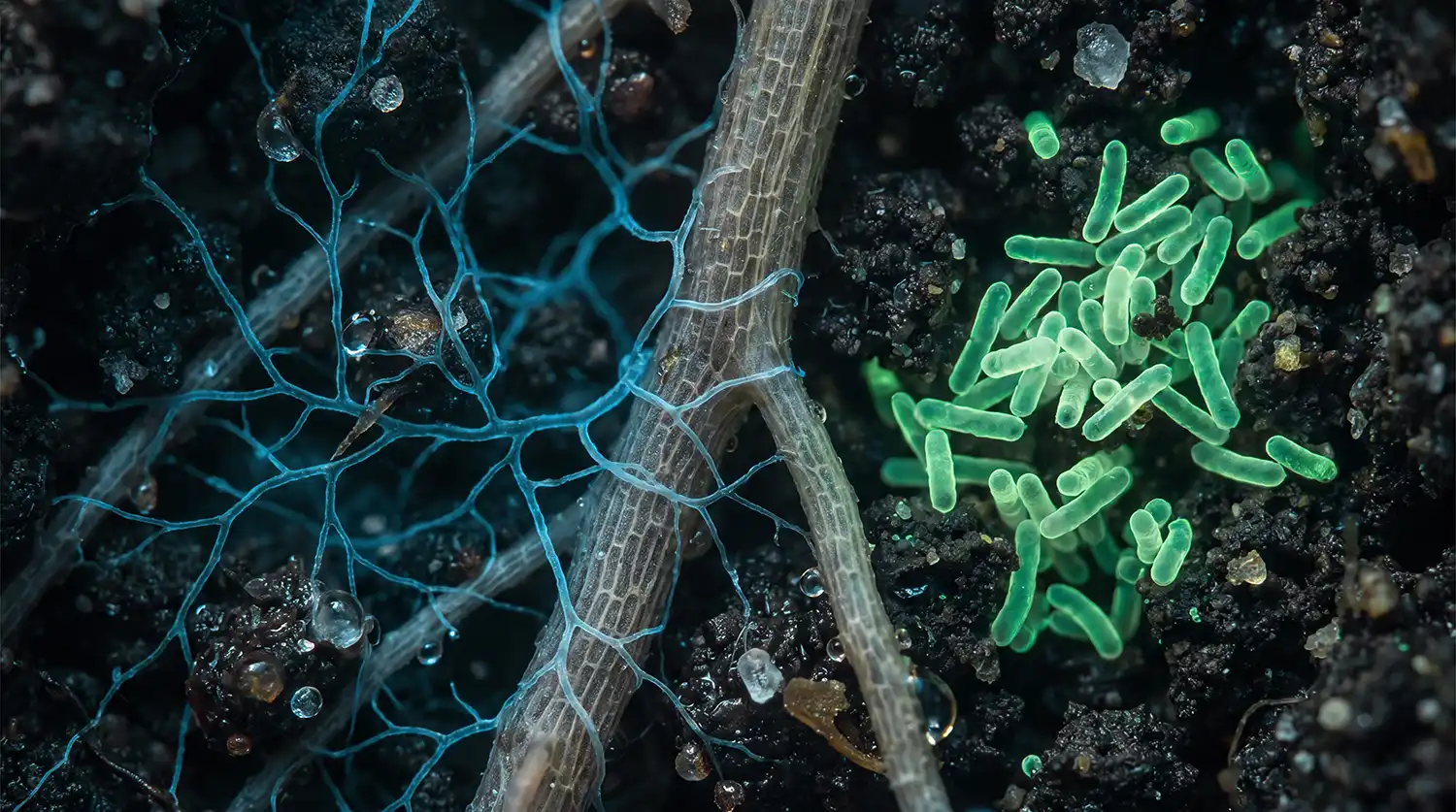

Your farm requires billions of bacteria and fungi, working together, to produce a crop. However, having an abundance of microorganisms alone doesn’t guarantee that your soil is functioning as well as it can. The balance between these two groups can influence everything on your farm from residue breakdown to phosphorus availability, including how much value you get from the nutrients already in your soil.
It’s easy to lump everything living beneath the soil surface together as “soil biology.” But a healthy biological system depends on different organisms performing different jobs . . . all while working together.
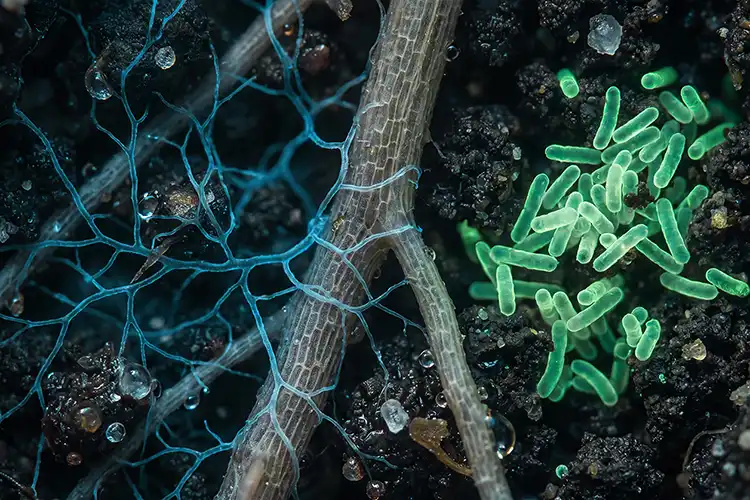
Here’s how the system operates in simple terms: Bacteria are especially effective at breaking down materials and releasing nutrients. Fungi, on the other hand, build the networks through the soil that help transport those nutrients. On the back side, fungi also work to decompose residue and support overall plant health.
And neither group can do their assigned work alone: Your crop benefits most when bacteria, fungi, plant roots, and other microorganisms work together as one functioning biological system.
Bacteria may be much smaller than the eye can see, but if their contributions to your soil go missing, you’ll definitely notice the effect on your crop and your bottom line. Different species of bacteria perform different functions. Some help break down organic materials. Others interact with minerals and help solubilize nutrients, converting them into forms that can move through the soil and eventually become available to your plants.
That makes bacteria an important first step in many nutrient pathways. But releasing a nutrient is only part of the job. Once that nutrient becomes available, it still needs a way to reach your crop. That’s where fungi step in.
Fungi can form long microscopic filaments called hyphae. Together, those filaments form larger networks called mycelium that extend through the soil. Just as a network of roads allows us to get around above ground, from your driveway to a township road to a trunk highway, these underground networks are your soil’s transportation infrastructure.

Bacteria and nutrients interact with these fungal pathways as nutrients move toward plant roots. The fungal network also extends far beyond the area a root can directly explore, dramatically increasing the volume of soil from which a plant can potentially access nutrients.
At Biotech Innovations, we pay especially close attention to fungal populations because compromised fungal networks can interrupt these nutrient pathways, even when plenty of bacteria are available in the soil to convert nutrients.
One important group of microbials, mycorrhizal fungi, forms a direct partnership with living plant roots. Plants supply the fungi with carbohydrates produced through photosynthesis. In return, the fungi explore outward through the soil to help the plants access nutrients and water beyond the immediate reach of their roots.
Phosphorus is an important example of why this symbiotic relationship helps grow your best crop. Phosphorus doesn’t move easily through the soil on its own. Biotech Innovations commonly sees better phosphorus movement in soils with stronger fungal populations, because those fungal networks help connect phosphorus in the surrounding soil with the plant.
The plant feeds the fungi. The fungi help feed the plant. Your farm benefits with increased yields and more efficient use of your fertility dollars.
Another category of fungi, Saprophytic fungi, feed on dead organic material, including the stalks, leaves, and other crop residue left behind after harvest. This is critical, because residue isn’t just “trash” that you need to slice and dice with tillage: it holds carbon and other nutrients that can be recycled into your soil to feed your next crop.
Therefore, diverse and healthy fungal populations help your farm at both ends of the growing cycle: moving nutrients to living plants and recycling nutrients from plants after they die.
Now that you know that each type of microbiology performs important functions for your farm, it’s important to also consider the balance side of the equation: It’s not good to have too much of a good thing. At Biotech Innovations, one of the first relationships we examine on our SFA report is the fungi-to-bacteria ratio. Agricultural soils often contain plenty of bacteria while showing comparatively weak fungal populations.
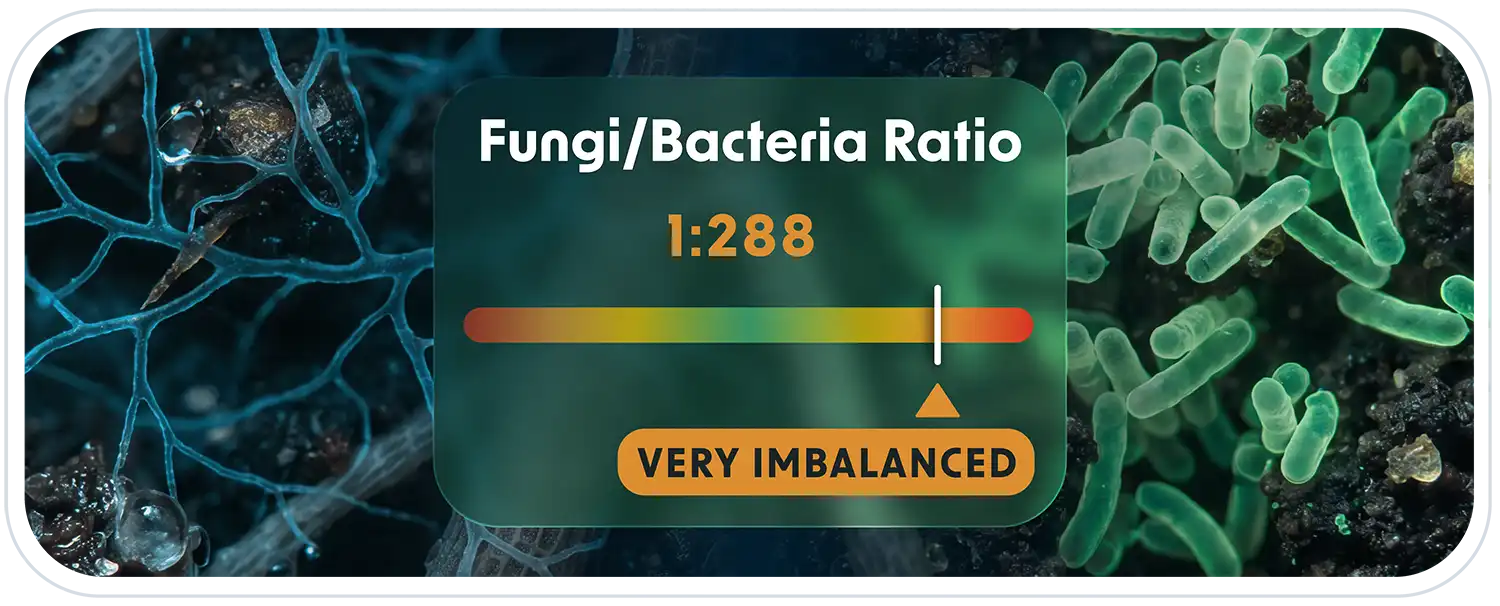
Why does this happen? Fungi are especially vulnerable to repeated disruptions. Tillage, for example, physically breaks the mycelium networks extending through the soil. Certain fertility and crop-protection inputs can also compromise fungal populations and the relationships fungi form with plant roots.
So, bacteria may remain abundant while the fungal side of the system is repeatedly compromised. The result isn’t “dead” soil; it’s an unbalanced biological system that may not be able to perform the work your crop depends on at a high enough level to optimize your fertility program and yields.
Imagine building a warehouse with rack after rack of raw materials and hiring the workers needed to organize, palletize, and ship the raw materials to the factories that will consume them. But what if there were no decent roads leading to the docks or no trucking company to pick up the goods? Well, they would be going nowhere fast.
A bacteria-heavy soil can create a similar problem. Bacteria may continue releasing and processing nutrients, but compromised fungal networks result in few “roads” available to actually move the nutrients toward the roots (and the plants) that need them. Weak fungal populations may influence:
Therefore, the fungi-to-bacteria ratio is much more than a measurement of each microbe category present; it’s an important clue about whether the entire biological network is properly equipped to do its job.
The fungi-to-bacteria ratio becomes even more useful when we compare it with other measurements on your SFA report.
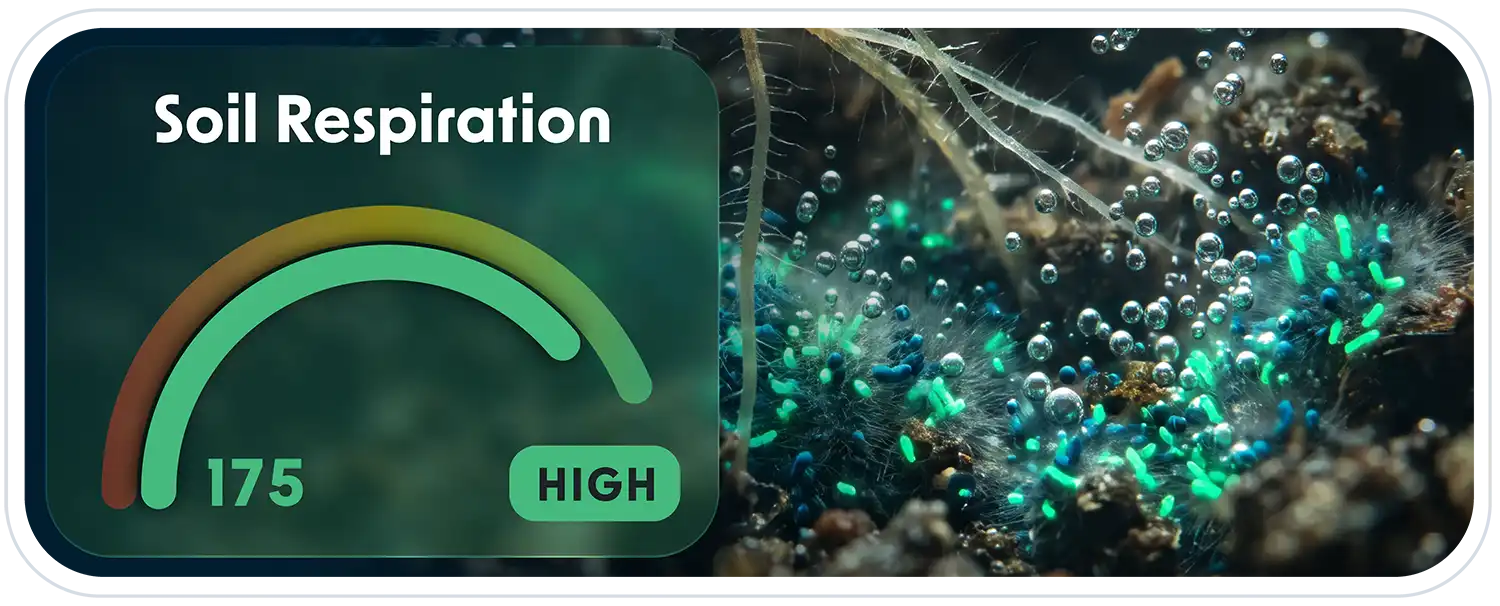
Soil respiration measures the CO2 released as microorganisms consume carbon and perform biological work. We commonly see higher respiration when fungi and bacteria are working within a better functional balance. When the SFA shows an extremely bacteria-heavy soil alongside low respiration, compromised fungal colonies are one of the first places we have to focus.
But fungi also need food. If microbially active carbon is low, the soil may not contain enough available energy to support the fungal colonies we’re trying to support. That means simply adding organisms isn’t necessarily enough. We also need to determine whether the biological community has the resources it needs to survive and function.
Read More: How to Tell if Your Soil is Working for Your Farm
As we’ve discussed in our other articles about the SFA report, you should shy away from trying to evaluate one number, such as the fungi-to-bacteria ratio, by itself. Two fields could have similar fungi-to-bacteria ratios but very different levels of biological activity.
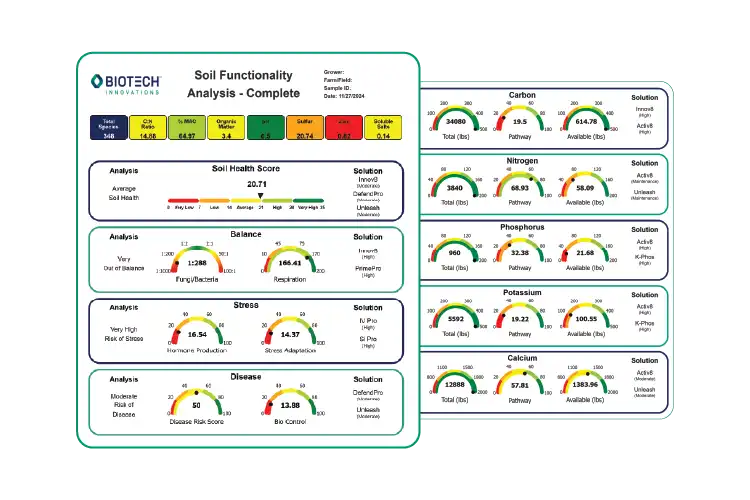
That’s why our SFA report gives you and your Biotech Innovations dealer an in-depth insight into your entire soil health picture, with measurements such as:

Together, these measurements help answer several important questions:
That’s a much more useful picture than simply knowing how many microorganisms are present, or what’s currently stored up in your nutrient “bank.”
The goal isn’t to simply hit a “perfect” fungi-to-bacteria number on a report. The ultimate goal is to restore biological functions in your soil that contribute to a healthy and profitable crop.
If an SFA report identifies compromised fungal populations, your Biotech Innovations dealer can develop a program designed to support the specific organisms and pathways that need attention. Depending on what the report reveals, that may include reintroducing targeted fungi and bacteria or providing support for the organisms already working in your soil. Biotech Innovations can help rebuild the partnerships that help:
An SFA report is a starting point to better soil health. More profitable crop performance is where we want to finish.
Your crop doesn’t need fungi instead of bacteria, or bacteria instead of fungi. Your crop needs a functioning community in which both groups can perform the jobs they do best.
A complimentary Soil Functionality Analysis report from your Biotech Innovations dealer helps reveal whether those populations are working together or whether an imbalance may be limiting nutrient movement, residue breakdown, and the return on your fertility investment.
From there, your dealer can build a program to restore the organisms and pathways your soil needs to Unlock the Power in Your Soil.