A Guide to Your Soil Functionality Analysis Report
A Soil Functionality Analysis report shows much more than nutrient levels. It shows how well your soil is actually working for your farm.


Your field may contain plenty of nitrogen, but that does not guarantee your crop can use it this year or next year. The balance between carbon and nitrogen in your soil influences how quickly residue breaks down, how much nitrogen becomes temporarily tied up, and how efficiently essential nutrients move into your growing crop.
The carbon-to-nitrogen ratio, commonly written as the C:N ratio, compares the amount of carbon in a soil sample or organic material with the amount of nitrogen in that same sample.
For example, a C:N ratio of 10:1 means the sample contains approximately 10 parts carbon for every 1 part nitrogen. The next question is a natural one: Why is this important for my farm?
Carbon supplies energy to bacteria, fungi, and other organisms working to deliver nutrients to your crop and ward off disease beneath the soil surface. Those organisms also need nitrogen to grow, reproduce, and break down organic material. When carbon and nitrogen are available in the right proportions, biology can process crop residue while continuing to cycle nutrients through the soil.
When that relationship moves too far out of balance, residue breakdown and nitrogen delivery can become less efficient.
At Biotech Innovations, we generally consider a soil C:N ratio between approximately 10:1 and 12:1 to be a healthy functional range. This range reflects what we consistently observe in productive, biologically functioning soils, although other soil-health models may use different ranges.

A ratio near that range indicates that carbon and nitrogen are present in proportions the biological community can effectively use.
A substantially higher ratio suggests that the system contains a large amount of carbon compared with the nitrogen available to process it. A low ratio may indicate that nitrogen is high relative to the carbon needed to feed and stabilize the biological system.
Neither result tells the entire story by itself. However, an unbalanced C:N ratio provides an early indication that carbon cycling, nitrogen delivery, or both may not be functioning efficiently.
Your crop residue has its own carbon-to-nitrogen ratio. Corn stalks and other mature residue contain a large amount of structural carbon but comparatively little nitrogen. At Biotech Innovations, we estimate that corn residue lying on the soil surface may have a C:N ratio around 60:1—far wider than the ratio we want to see within a soil system that’s functioning efficiently.
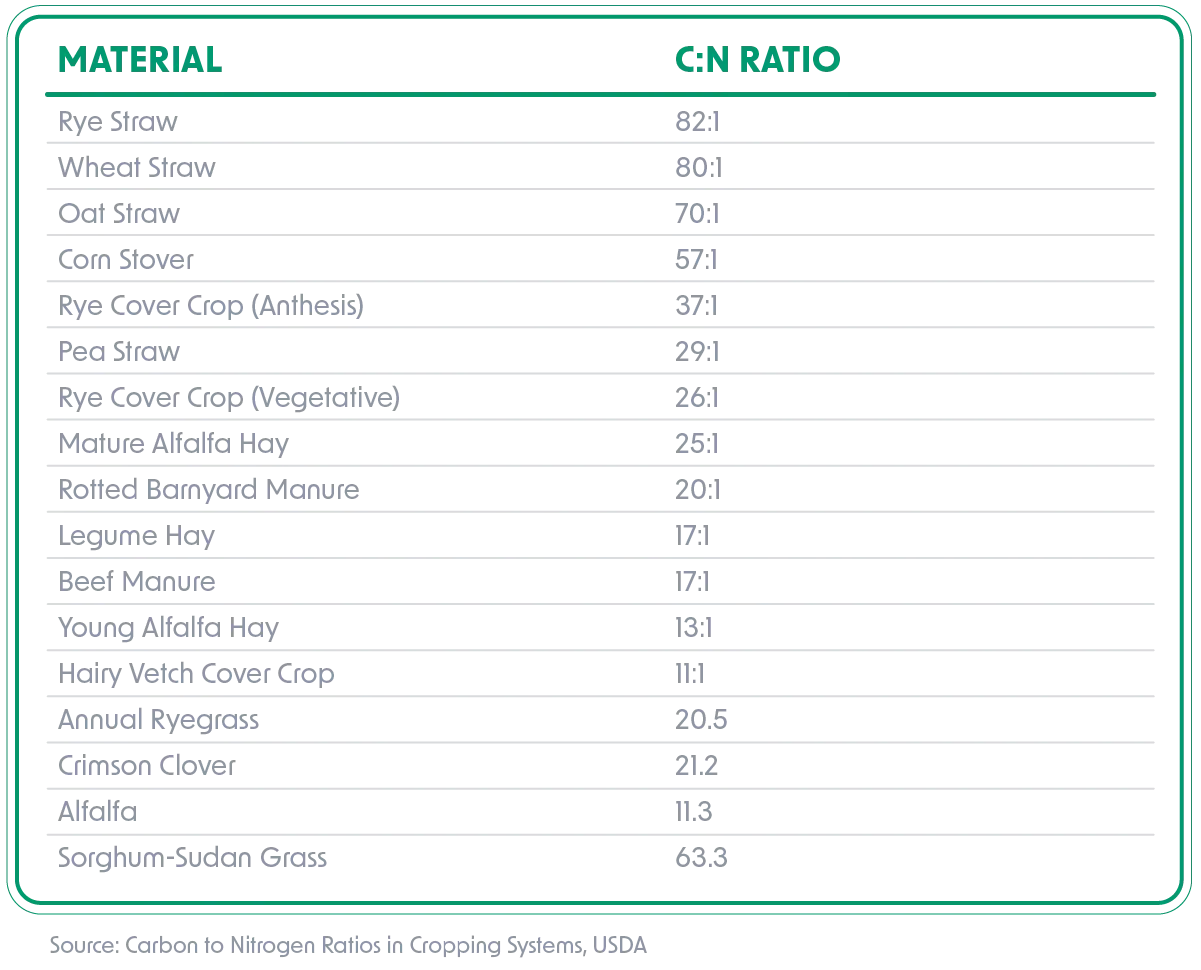
That difference matters because microorganisms need additional nitrogen to digest a high-carbon food source. Think of the residue as a large meal delivered to the biological community. The carbon provides plenty of energy, but the organisms also need nitrogen to build their bodies and multiply as they consume it. When the residue does not contain enough nitrogen to meet that need, biology begins drawing nitrogen from the surrounding soil.
This is commonly described as nitrogen tie-up or immobilization. The nitrogen has not disappeared from the field. Instead, it has temporarily become part of the organisms and residue-decomposition process rather than remaining immediately available to the crop.
After a high-yielding corn crop, a large volume of carbon-rich residue remains on the soil surface. As microorganisms begin digesting that residue, they may draw available nitrogen into the decomposition process to bring the material closer into a usable biological balance. That can make nitrogen supply for the following crop temporarily tight, especially when residue breakdown is slow or the biological community lacks the organisms needed to complete the job efficiently.
This helps explain why simply measuring the amount of nitrogen in the soil does not always tell you how much will reach the crop when it needs it. A field may contain substantial nitrogen while part of that supply remains:
The question is not only how much nitrogen is present? It is also:
“How effectively are the microorganisms in your soil converting nitrogen into a plant-available form?”
While residue management is important on the farm, residue is far more than a problem that needs to be sliced, sized, or removed: it is also a valuable reserve of carbon and other nutrients.
At Biotech Innovations, we estimate that the corn residue on an acre may contain approximately 120 pounds of nitrogen. Efficiently breaking down that material creates an opportunity to recycle part of that nitrogen instead of allowing it to remain trapped in residue, which in turn means that your yields may have to depend more on adding more and more fertilizer.
When the right fungal and bacterial communities are present, they digest residue and return its nutrients to the active soil system. Fungi perform an especially important role in processing tougher, carbon-rich plant material, while other organisms continue breaking down and cycling the compounds released from it.
Residue breakdown is therefore not simply about clearing the soil surface before planting, but an integral part of your farm’s fertility program.
Carbon supplies the energy that allows soil organisms to perform their work. Nitrogen is one of the nutrients those organisms help process and deliver.
When the carbon cycle is functioning, microorganisms can:
When the carbon cycle is compromised, those functions slow down.
At Biotech Innovations, we consider carbon to be the primary food source for soil biology. The organisms responsible for cycling nutrients need microbially active carbon, largely in the form of carbohydrates, to supply the energy required for that work. Better carbon function therefore improves the availability of nitrogen as well as other nutrients.
This is why we do not view carbon and nitrogen as separate fertility categories. Their relationship helps determine whether the biological system can put the nutrients already in your field to work.
When residue is slow to break down or the following crop appears short of nitrogen, applying additional fertilizer may seem like the obvious solution. Sometimes more nitrogen is necessary. But adding nitrogen without improving biological function may only treat the immediate symptom.
If residue-processing organisms are missing, fungal populations are weak, or available carbon is low, the soil may still struggle to cycle both its existing nitrogen and the additional fertilizer efficiently. The crop can become increasingly dependent on soluble applications while nutrients already present in the field remain underused.
The better question is:
“Why isn’t the nitrogen already in the soil moving efficiently?”
To boost this underlying function, you may need to support the residue-digesting organisms in your soil, add beneficial organisms to your soil, or reduce management practices that can impair fungal and bacterial communities.
Read More: Why Modern Farming Practices Break Soil Function
A C:N ratio isn’t a soil health measure that you should evaluate in isolation. Two soils may have similar ratios but function very differently. One may contain an active and diverse biological community capable of processing residue quickly. The other may have low microbial activity, weak fungal populations, or insufficient available carbon.
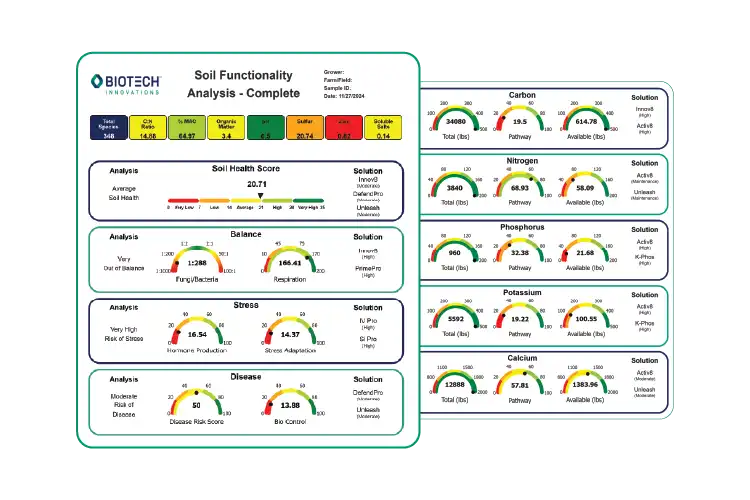
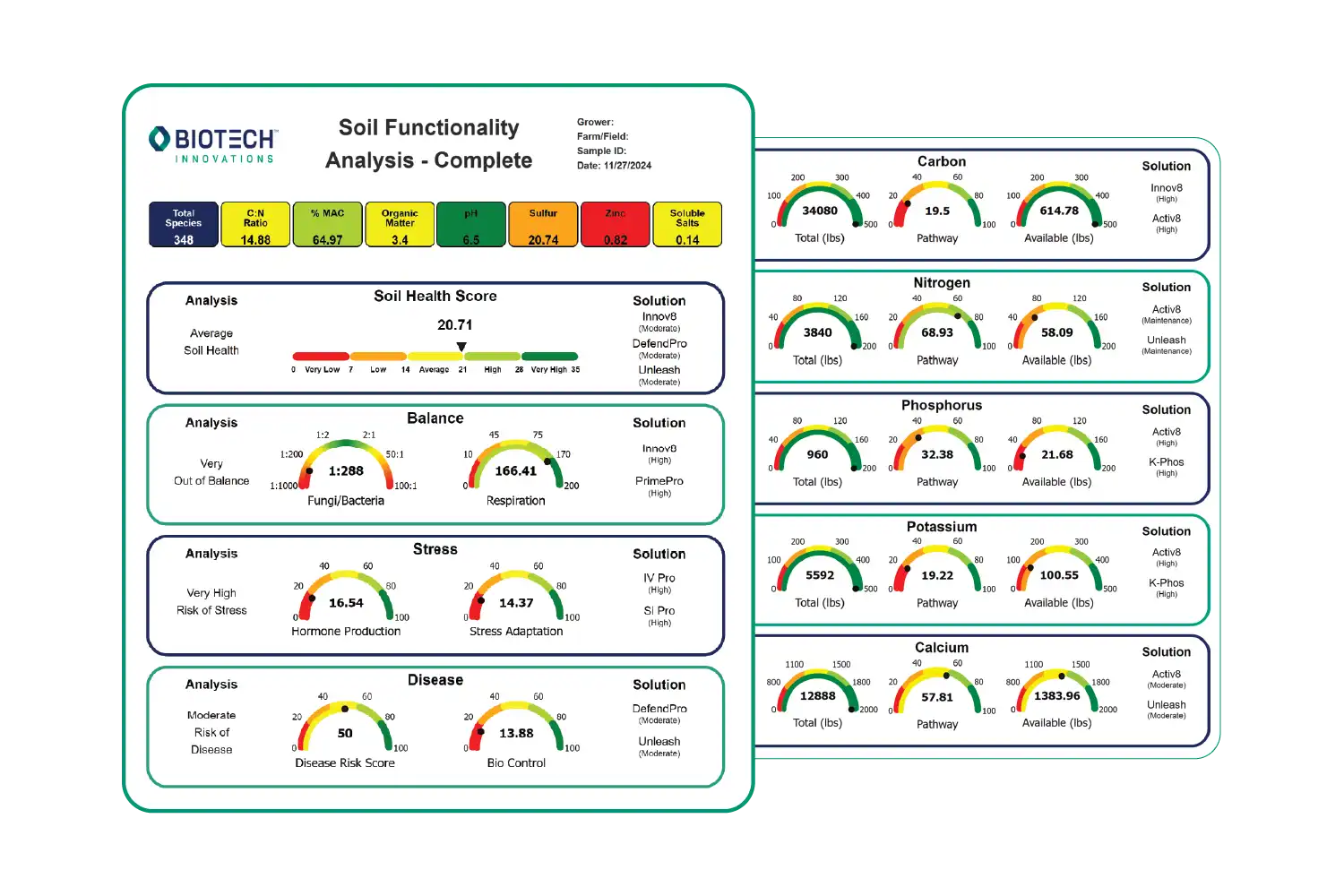
That is why Biotech Innovations’ Soil Functionality Analysis (SFA) Report evaluates the C:N ratio alongside measurements such as:
Together, these measurements reveal whether the soil has both the resources and the biological workforce required to cycle carbon and nitrogen effectively.
At Biotech Innovations, we consider the C:N ratio, microbially active carbon, fungi-to-bacteria balance, and respiration among the first indicators to review when assessing the condition of a soil system.
Read More: Understanding Your Soil Functionality Analysis Report
A traditional soil test may tell you how much nitrogen is present. Biotech Innovations' SFA Report, provided free of charge by your Biotech Innovations dealer, helps explain whether the biological system in your soil is positioned to make that nitrogen useful, or if there is a break in the system that may impair the movement of nitrogen toward your crop.
Your report shows whether the C:N ratio falls within an optimal range and places that result alongside the other measurements that affect carbon and nitrogen cycling.
This helps your Biotech Innovations dealer determine whether your fields may need support to ensure:
The goal is not simply to move one number into the green. Our overall aim is to improve the function that number represents.
Read More: Carbon: The Foundation of Soil Function
Carbon feeds your soil biology. Nitrogen supports both that biological community and the crop growing above it. When the two are properly balanced, residue becomes a nutrient resource instead of a barrier, and the soil becomes more efficient at cycling nitrogen to your crop.
A complimentary Soil Functionality Analysis Report from your Biotech Innovations dealer can help you understand your field’s carbon-to-nitrogen balance and identify what may be limiting residue breakdown and nitrogen availability. Together, we’ll Unlock the Power in Your Soil.