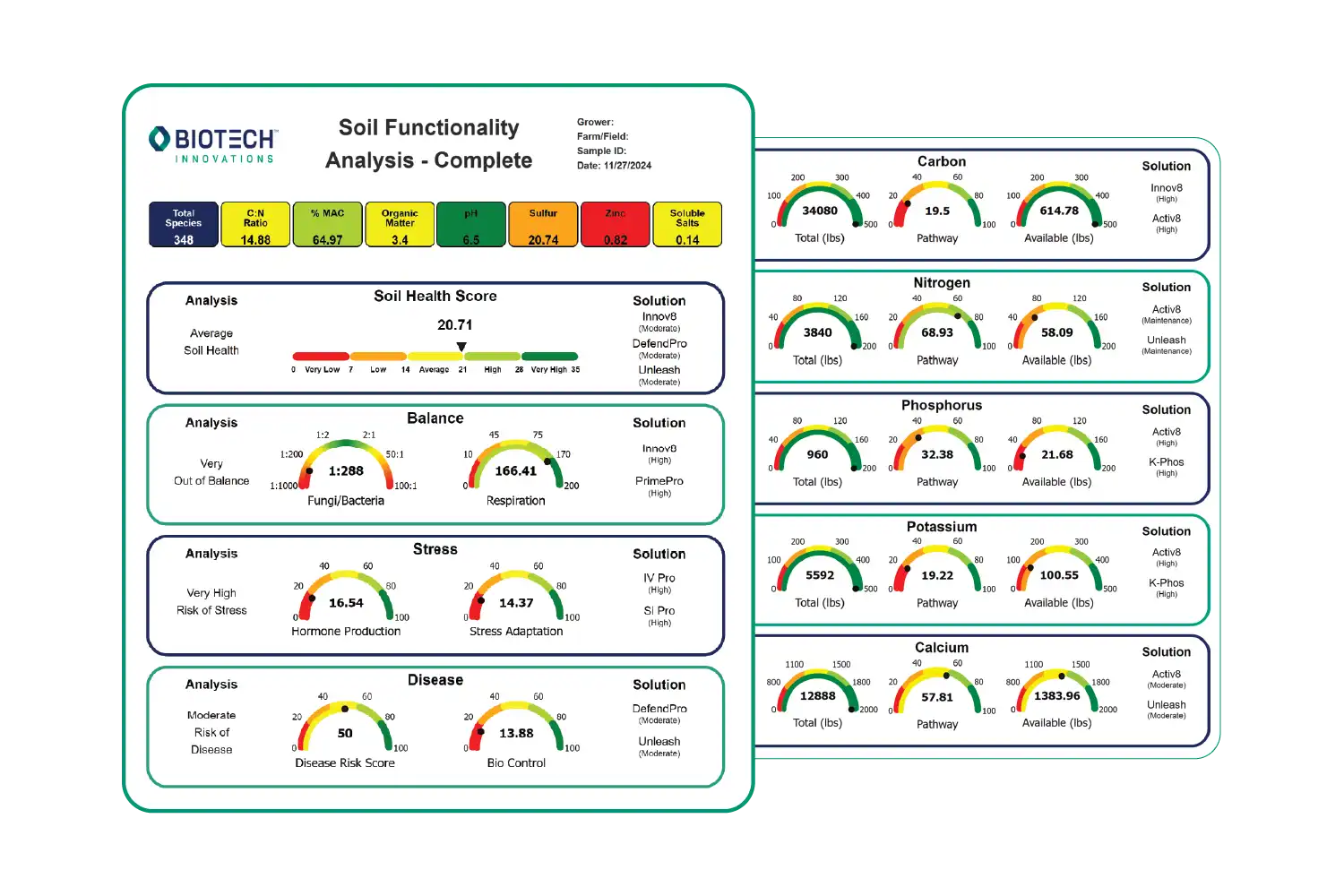
A Guide to Your Soil Functionality Analysis Report
A Soil Functionality Analysis report shows much more than nutrient levels. It shows how well your soil is actually working for your farm.


When we talk about nutrients on the farm, the conversation usually begins with nitrogen, phosphorus, and potassium. N, P, and K deserve all the attention they receive. After all, they’re essential to a bumper crop. But there's another element quietly driving nearly everything that happens beneath your feet: carbon.
“Wait a second . . . I don’t actually apply carbon to my crop.” Why are we talking about carbon? Because carbon is essential to all life, including the plants on your farm. It does far more than build leaves, stalks, and roots. Carbon fuels the billions of microorganisms that make healthy soil function by cycling nutrients, improving soil structure, and helping deliver fertility to your crop.
If you've ever wondered why two fields with similar soil test results can produce very different yields or why adding more fertilizer doesn’t always produce better results, understanding carbon is one place to start.
Carbon makes up nearly half of a plant’s dry weight. But plants don't keep all of that carbon for themselves. Through photosynthesis, plants convert sunlight, water, and carbon dioxide into carbohydrates. A portion of those carbohydrates is released into the soil through the roots as compounds called root exudates.
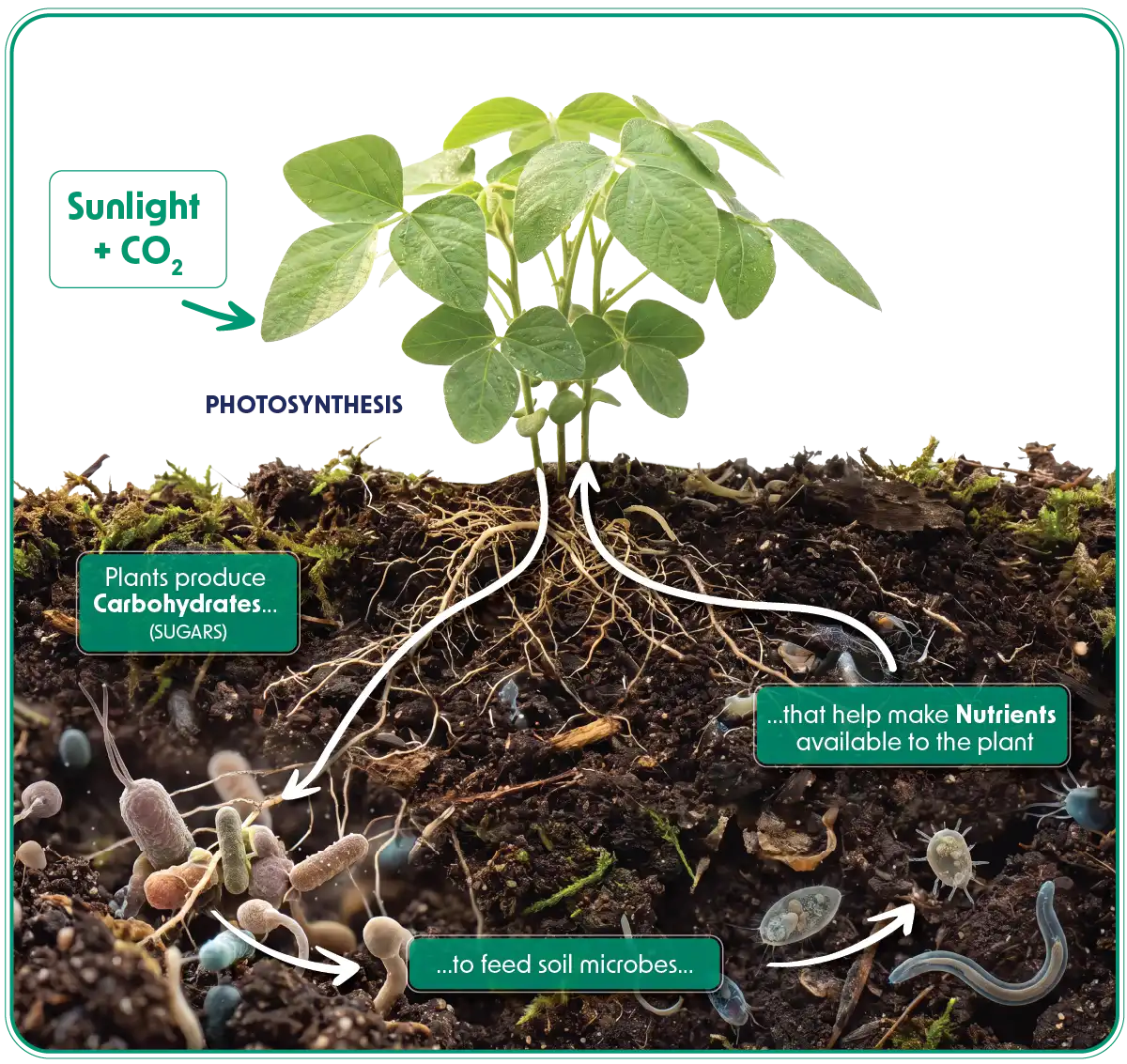
Why would plants “give away” all that food they worked so hard to make? If they kept more carbon for themselves, wouldn’t they grow bigger and produce more grain? Not exactly. This isn’t the way the system works. When plants send carbohydrates to the soil, they’re making an investment.
Plants use carbon to feed the microorganisms living around their roots. In return, those microorganisms perform jobs the plant can't do alone. Healthy plants don't simply grow in the soil, they feed the biological community that feeds them back.
Healthy soil is anything but lifeless. Billions of bacteria, miles of fungal networks, and countless other microorganisms are constantly working beneath the surface. Together, they decompose crop residue, recycle nutrients, improve soil structure, suppress disease, and help move nutrients toward plant roots.
Like any workforce, these microorganisms require energy. Carbon is the currency plants use to pay that workforce. As root exudates enter the soil, they stimulate biological activity around the root system. The microorganisms respond by multiplying and carrying out the countless processes that keep nutrients cycling through the soil. In other words, carbon fuels the natural process needed to grow your crop.
It’s the way nature has worked for millions of years. "Sure, but a farm isn’t a prairie or a forest—it’s a system that needs to produce a cash crop," you say. True, but you’re still playing by the same rules. A healthier partnership between your crop and soil biology will result in a healthier balance sheet.
One of the biggest misconceptions about soil fertility is that nutrients naturally move from the soil into the plant. They do, but, nutrients require biological activity before they become readily available for plant uptake.
That's why carbon matters so much to your farm.
Without an adequate supply of carbon, biological activity slows. As that activity declines, nutrient cycling becomes less efficient, making it more difficult for crops to access nutrients already present in the soil. This helps explain why two fields with similar fertility levels can produce very different results. Often, it's how effectively the soil's biological system is converting, transporting, and delivering those nutrients throughout the growing season.
It’s tempting to think of carbon and organic matter as interchangeable terms. The two are closely related, but not identical. Organic matter is one important reservoir of carbon within the soil, but not all carbon is equally available to support biological activity. Some forms remain relatively stable for years, while others are actively cycling through the soil every day, feeding microorganisms and driving nutrient availability.
That's why a complete understanding of carbon and its importance on your farm isn’t tied to a single number.
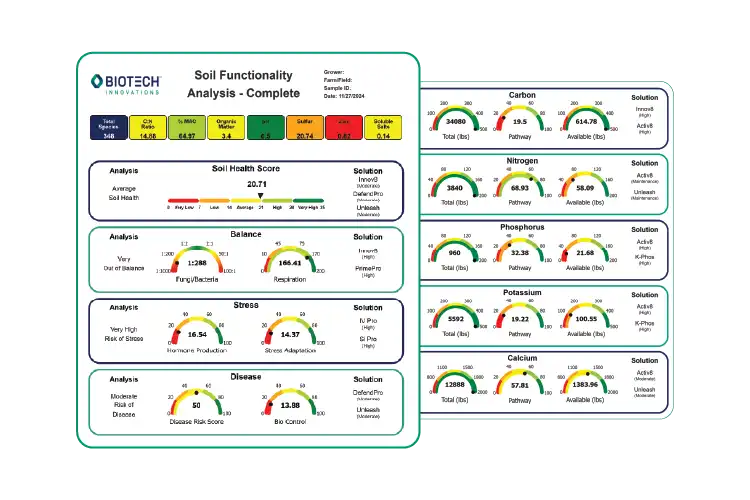
Our Soil Functionality Analysis (SFA) report evaluates carbon in several ways that, together, tell the story of how carbon is functioning within your soil:
Each measurement provides a different perspective on your soil's ability to support healthy biological activity.
Read More: Release More Nitrogen with a Healthy Carbon-to-Nitrogen Ratio
Healthy soils depend on continuous carbon cycling. Every growing season, plants capture carbon from the atmosphere, feed a portion of it to the living organisms around their roots, and return additional carbon to the soil through crop residue.
That cycle has sustained healthy soils for thousands of years. Production agriculture, however, places enormous demands on that system. Practices such as repeated tillage, salt-based fertilizers, and certain management practices and crop protection products can reduce biological activity and disrupt the fungal networks responsible for moving nutrients through the soil.
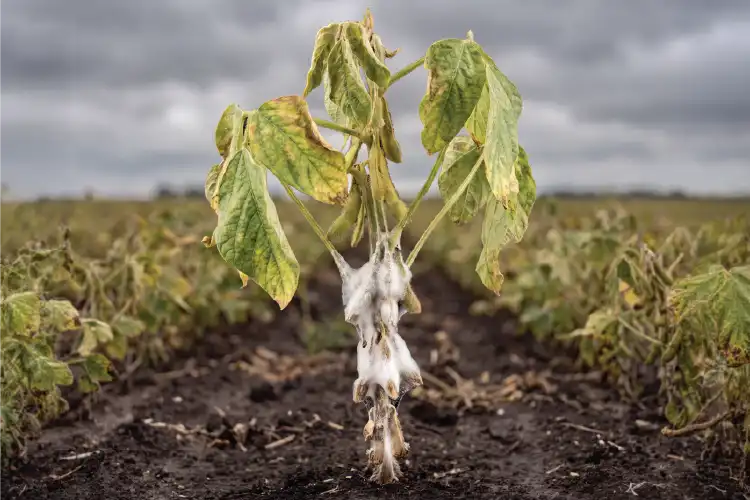
As those biological pathways become less effective, nutrient cycling slows. Crops become increasingly dependent on applied fertility, not necessarily because nutrients are absent, but because the biological system responsible for delivering them is no longer functioning as efficiently as it can.
Because carbon drives so many biological processes, it makes sense to understand how it’s functioning before making major fertility decisions. At Biotech Innovations we spend the first dollar on your farm by providing an SFA report, which includes multiple measures of carbon in your soil, from carbon pathways to microbially active carbon and organic matter levels.
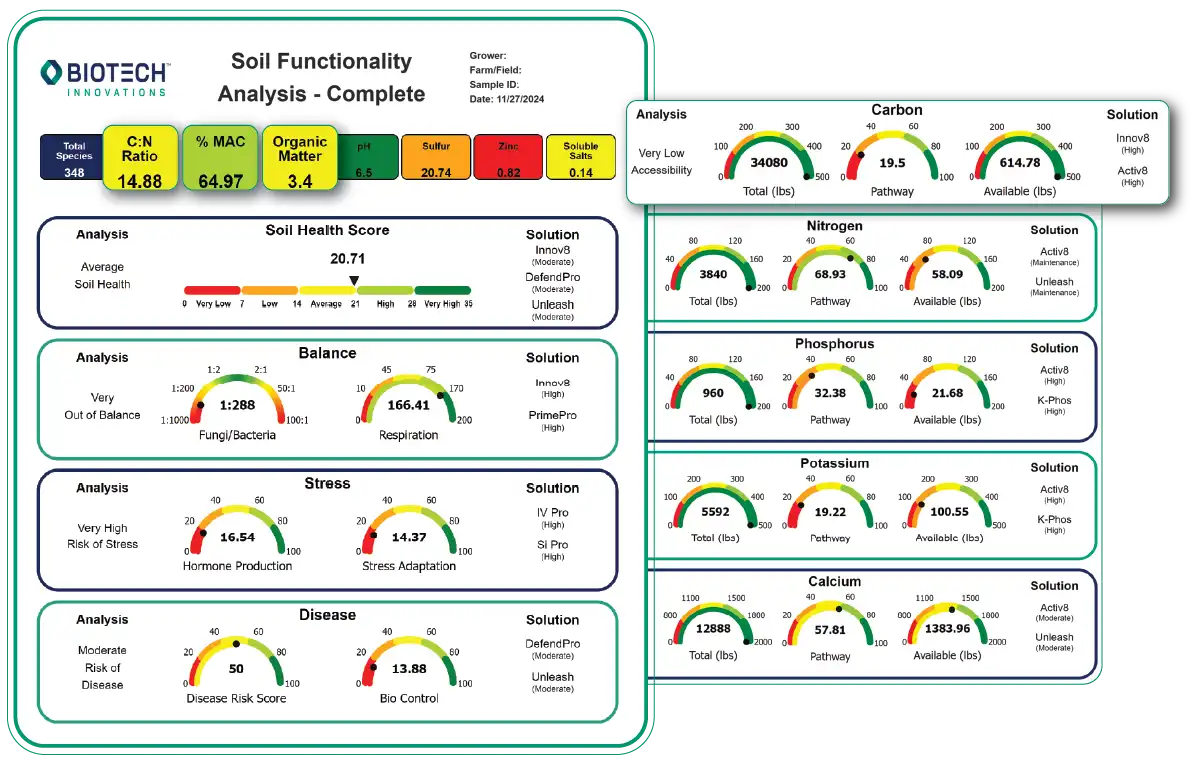
The SFA helps identify how well the carbon cycling process in your soil is working. With that understanding, you can make more informed management decisions and begin to address the underlying causes of issues that range from ballooning fertilizer budgets to increasing disease pressures. You get out in front of the problems instead of always having to react to symptoms.
Read More: A Guide to Your Soil Functionality Analysis Report
Plants feed biology. Biology feeds plants. Carbon is far more than another nutrient to measure: it’s the foundation of your farm’s biological system that influences nutrient availability, crop resilience, and long-term soil productivity.
If you're looking to improve nutrient efficiency, better understand what's happening beneath your feet, and get more from every fertility dollar you invest, start by understanding how carbon is functioning in your soil.
Connect with your local Biotech Innovations dealer to schedule a complimentary Soil Functionality Analysis test. Together, we'll identify what's limiting your soil's performance and develop a strategy to Unlock the Power in Your Soil.