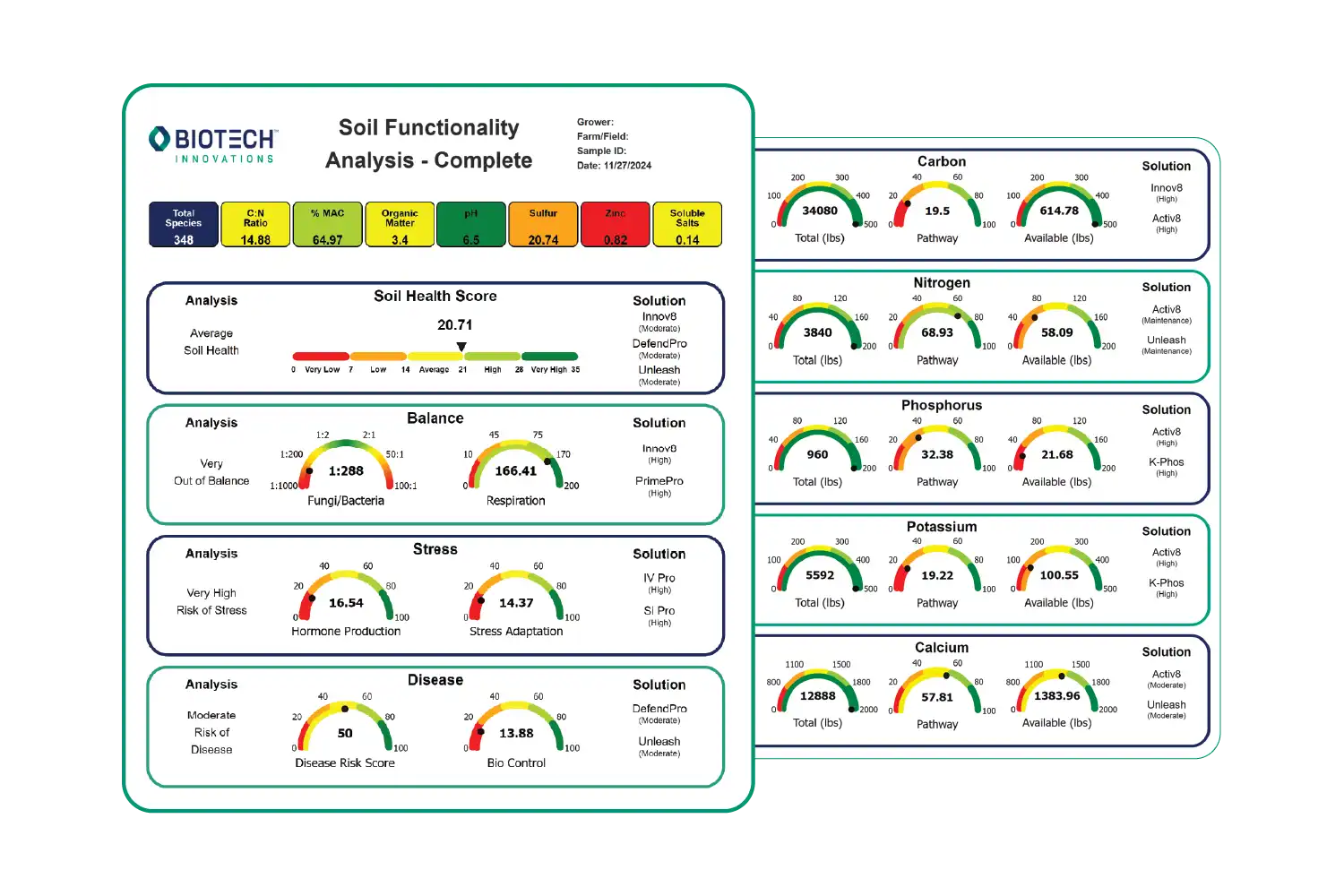
A Guide to Your Soil Functionality Analysis Report
A Soil Functionality Analysis report shows much more than nutrient levels. It shows how well your soil is actually working for your farm.


You apply nutrients to your fields. Your plants absorb them. Your crops grow. You harvest the results, right? In the most basic sense, yes. But nature is slightly more complicated than that. Your eventual yields actually depend on a crucial partnership beneath your feet.
Long before roots absorb nitrogen, phosphorus, potassium, and other essential nutrients, billions of microorganisms beneath the soil surface have work to do. They dissolve minerals, transport nutrients, recycle crop residue, and help deliver fertility to your crop. Without that living biological system, your fertilizer can't work as efficiently as it was designed to.
Every day, growing plants capture energy from the sun through photosynthesis. The plants use a portion of the carbohydrates to build leaves, stalks, and roots. They also release a portion into the soil through their roots as compounds called root exudates.
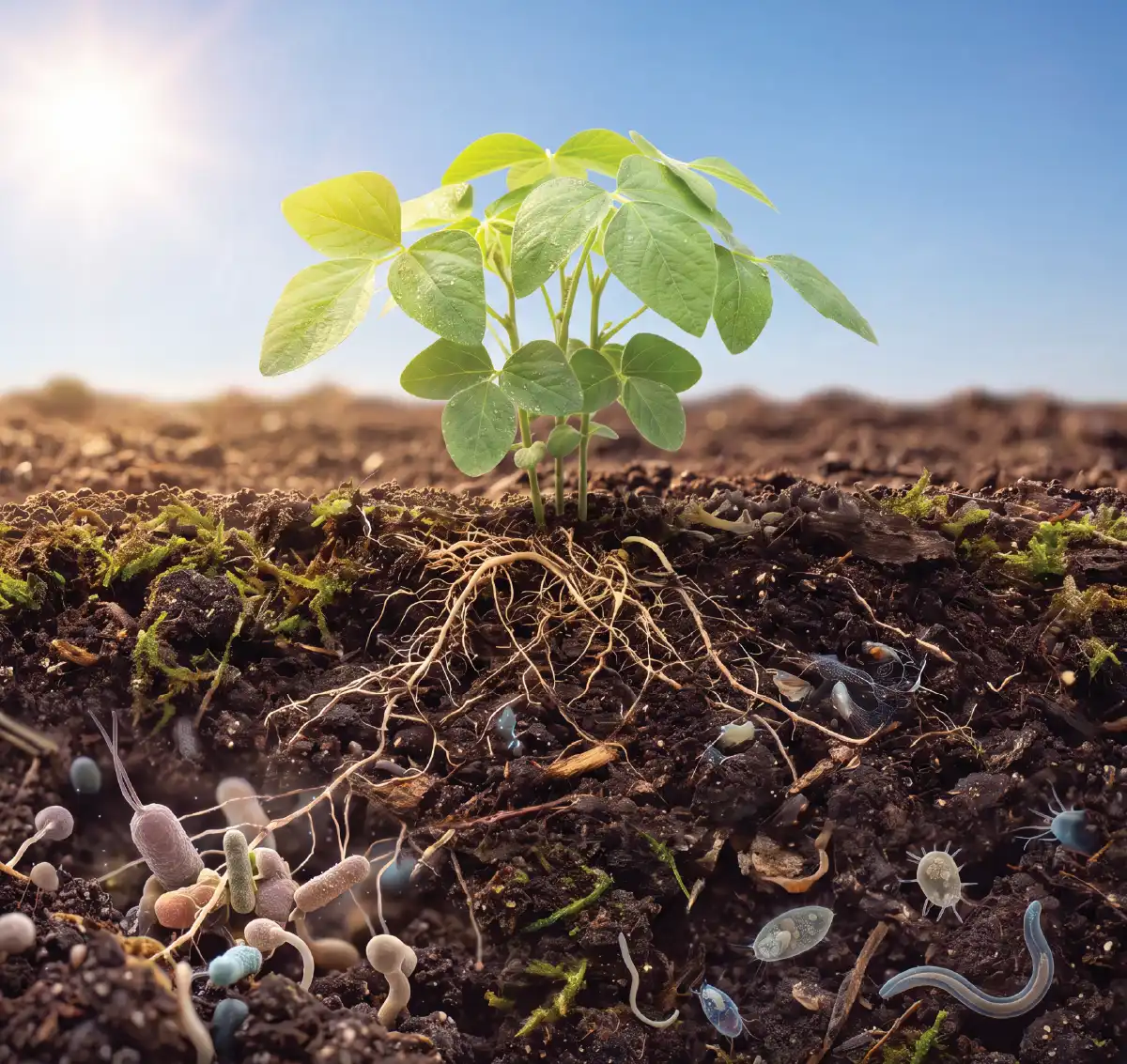
Why do plants “invest” valuable energy in the soil when they could use it to produce more grain or grow bigger or stronger? Because those carbohydrates feed the microorganisms living around the root system. In return, these microbes help supply nutrients to the plants, protect the root zone from disease, and support many biological processes the plants can’t perform on their own. In simple terms:
Plants feed soil biology. Soil biology feeds plants.
Healthy soil includes a rich diversity of microorganisms. Two groups, bacteria and fungi, play especially important roles in nutrient availability for your crop.
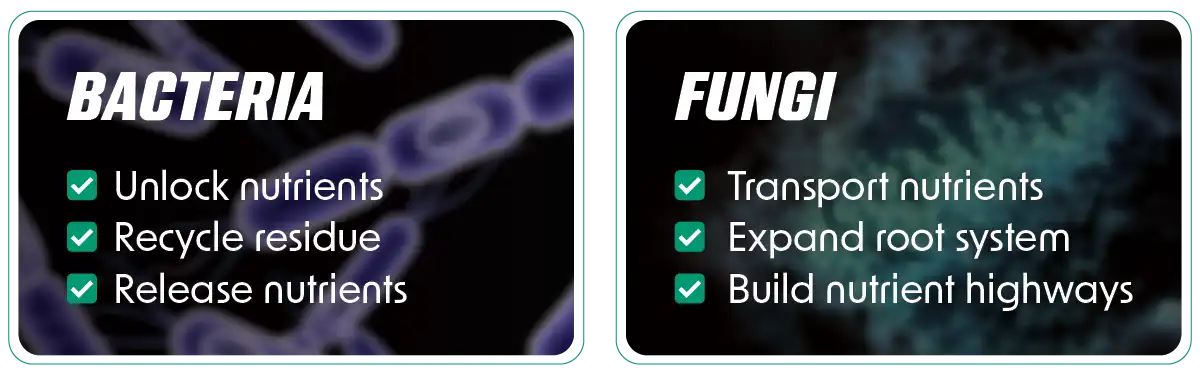
Many bacteria specialize in breaking down organic materials and dissolving nutrients from soil particles. Think of bacteria as the workforce that begins the nutrient cycling process. As they decompose residue and interact with minerals, nutrients become more available within the soil.
Without healthy bacterial populations, much of that recycling process slows dramatically.
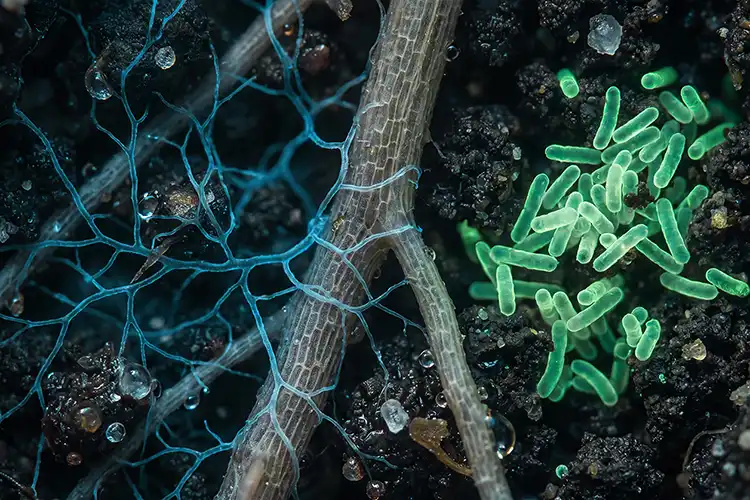
If bacteria help unlock nutrients, fungi help move them. Rather than depending solely on roots to explore the soil, plants rely on fungal networks to extend their reach. Think of fungi as the transportation system connecting nutrients to plant roots.
Mycorrhizal fungi form extensive networks of microscopic threads throughout the soil. These networks dramatically expand the effective reach of the plant's root system, allowing nutrients, even relatively immobile nutrients like phosphorus, to move more efficiently toward the plants.
One of the biggest misconceptions about fertility is that nutrients simply diffuse through the soil until roots absorb them. The reality is much more dynamic. Healthy soil biology creates pathways that continuously recycle, transport, and deliver nutrients throughout the growing season.
When those biological pathways are functioning well, nutrients move more efficiently and crops can access more of the fertility already present in the soil. When those pathways become disrupted, nutrients may remain in the soil while crops struggle to utilize them.
That's why two fields with similar soil test results can perform very differently. The difference often isn't how much fertility exists: it’s how well the biological delivery system is functioning.
One of the more fascinating discoveries in soil biology is that plants don't simply absorb nutrients directly from the soil.
Researchers like Dr. James White at Rutgers University have shown that plants actively partner with microorganisms to acquire nutrients. One example is the rhizophagy cycle, where microbes gather nutrients from the soil, enter the plant's root, transfer nutrients to the plant, and then return to the soil to repeat the process.
While scientists continue learning more about exactly how this relationship works, one thing is becoming increasingly clear:
Plants and soil biology don't operate independently. They work together.
Healthy biology doesn’t maintain itself automatically. Repeated soil disturbance, certain fertilizers, and other management practices can reduce biological activity and interrupt the natural partnerships between plants and soil microorganisms. As biological function declines, nutrient pathways become less efficient. Crops become increasingly dependent on applied fertilizer, not necessarily because nutrients are missing, but because the biological system responsible for delivering them isn’t functioning as effectively as it should.
Restoring soil biology isn’t about replacing fertilizer. It’s about helping every fertilizer dollar work harder by rebuilding the biological system responsible for nutrient cycling.
Because soil biology drives nutrient availability, it makes sense to understand how well that system is functioning before making fertility decisions.
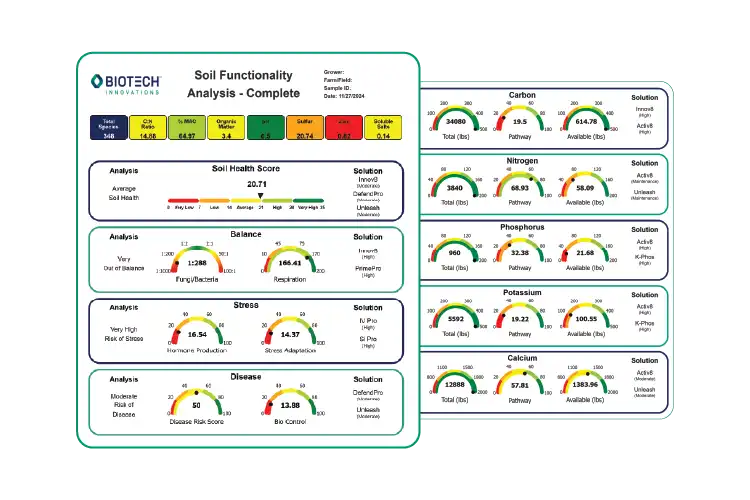
That’s why your Biotech Innovations dealer begins with a Soil Functionality Analysis (SFA) Report to gather important information about your soil. Rather than measuring nutrient levels alone, the SFA evaluates the biological processes that influence nutrient movement throughout the soil.
Understanding those processes helps identify opportunities to improve fertilizer efficiency, reduce unnecessary inputs, and build a healthier soil system for the long-term health of your farm.
Read More: Why Your Crop Can't Use the Nutrients Already in Your Soil
The return on your fertilizer investment depends on more than the nutrients in your spreader or sprayer. To maximize the value of your fertility program, you also have to support the living biological system responsible for making those nutrients available to your crop. If you want to improve nutrient efficiency and better understand how your soil functions, start with a complimentary Soil Functionality Analysis (SFA) Report from your Biotech Innovations dealer. Together, we'll identify opportunities to Unlock the Power in Your Soil.