A Guide to Your Soil Functionality Analysis Report
A Soil Functionality Analysis report shows much more than nutrient levels. It shows how well your soil is actually working for your farm.



Most farmers rely on soil tests to make fertility decisions. The process seems straightforward: collect soil samples, review nutrient levels, apply what your crop needs, and expect an ROI on your investment. Yet more and more farmers feel that this approach is falling short. Why?
Here’s the first question we have to ask: If a soil test shows that there are plenty of nutrients in your soil, why doesn’t your crop “use” them? Because nutrient levels and nutrient delivery are two very different concepts.
Traditional soil tests are great at basic accounting. They show you the amount of nutrients in your “bank account,” otherwise known as your farm’s soil. What traditional soil tests don’t tell you is how well your soil is functioning as a living biological system. If the system is out of balance, your crop may not be able to cash in on the nutrients in the “bank” when they need them the most. If you understand the difference between basic nutrient levels and the importance of the whole system, you’ll gain some important insight into your farm’s soil health.
Let’s put the inventory vs. overall system issue into another context: Imagine walking into a manufacturing plant with a fully stocked warehouse full of raw materials. The production line has all the machines necessary to manufacture the product; trucks are even waiting at the shipping doors to transport the goods to market. But there aren’t enough workers. So, the lights may be on, the materials ready, but nothing is moving down the line, from raw goods to finished product. There’s no income and no way for the company to capitalize on its investment in all those raw materials. If the situation goes on too long, those raw materials may even go to waste.
Likewise, your crop doesn’t directly benefit from the nutrients in your soil, or the nutrients you add to the soil before, during, and after the growing season. A complex chain of microorganisms in your soil must convert, transport, and deliver the nutrients to the roots.
When that system isn’t functioning properly, your crop can struggle even though your nutrient levels appear to be fine.
It’s easy to think of soil as a mixture of water, air space, organic matter, nutrients, and other filler such as rocks. The reality is quite different: Your soil is a living ecosystem.
Billions of bacteria, miles of fungal networks, and countless other microorganisms are constantly working beneath the surface. Together, they help decompose crop residue, recycle nutrients, improve soil structure, and move essential nutrients toward and into the plant.
Through photosynthesis, plants produce carbohydrates and release a portion of those sugars through their roots. These compounds, called root exudates, feed soil biology. In return, soil microorganisms help make nutrients available to the plant.
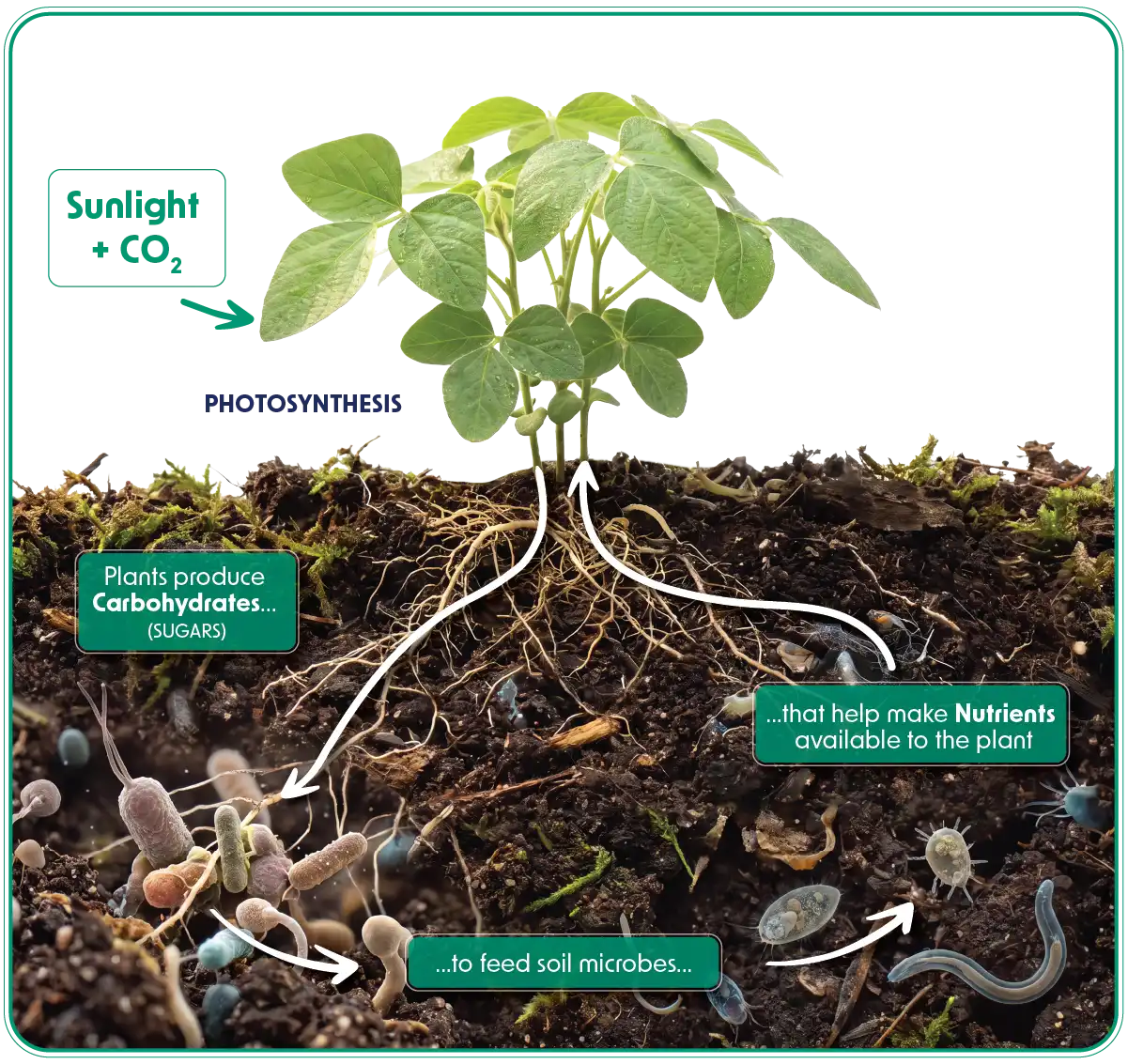
Plants aren't simply growing in the soil: they're actively feeding it. Through root exudates, plants supply carbohydrates to billions of microorganisms beneath the surface. In return, those microorganisms convert, transport, and deliver nutrients back to the plant. Healthy crops aren’t created by plants alone. Yields are built by a partnership between plants and the billions of microorganisms in your soil.
When crops show nutrient deficiencies—or you want to increase your yields—the natural response is usually to apply more fertilizer. Sometimes that’s exactly what’s needed. Often, though, your farm is actually facing a different problem.
If you add fertilizer to a living soil system that isn’t functioning properly, it’s as if you added more raw materials to the factory’s warehouse we mentioned earlier: You haven’t solved the basic problem of the workers needed to turn your raw materials into ROI. Often, the key to a more effective fertility program isn’t more fertility, it’s how effectively the soil biology is cycling and delivering nutrients throughout the year.
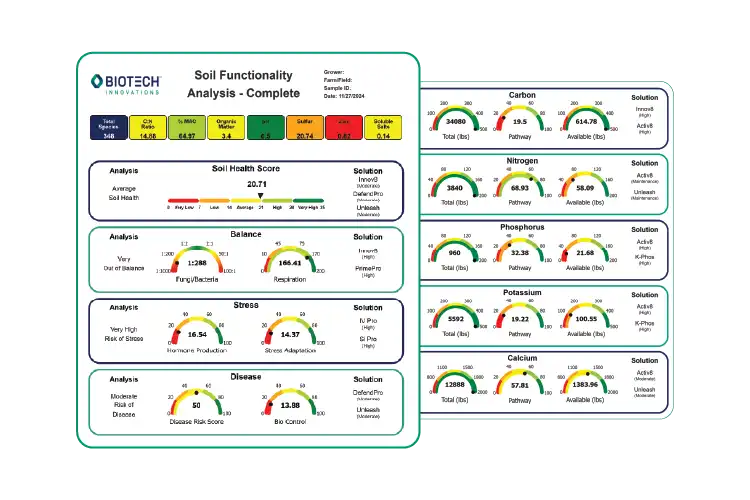
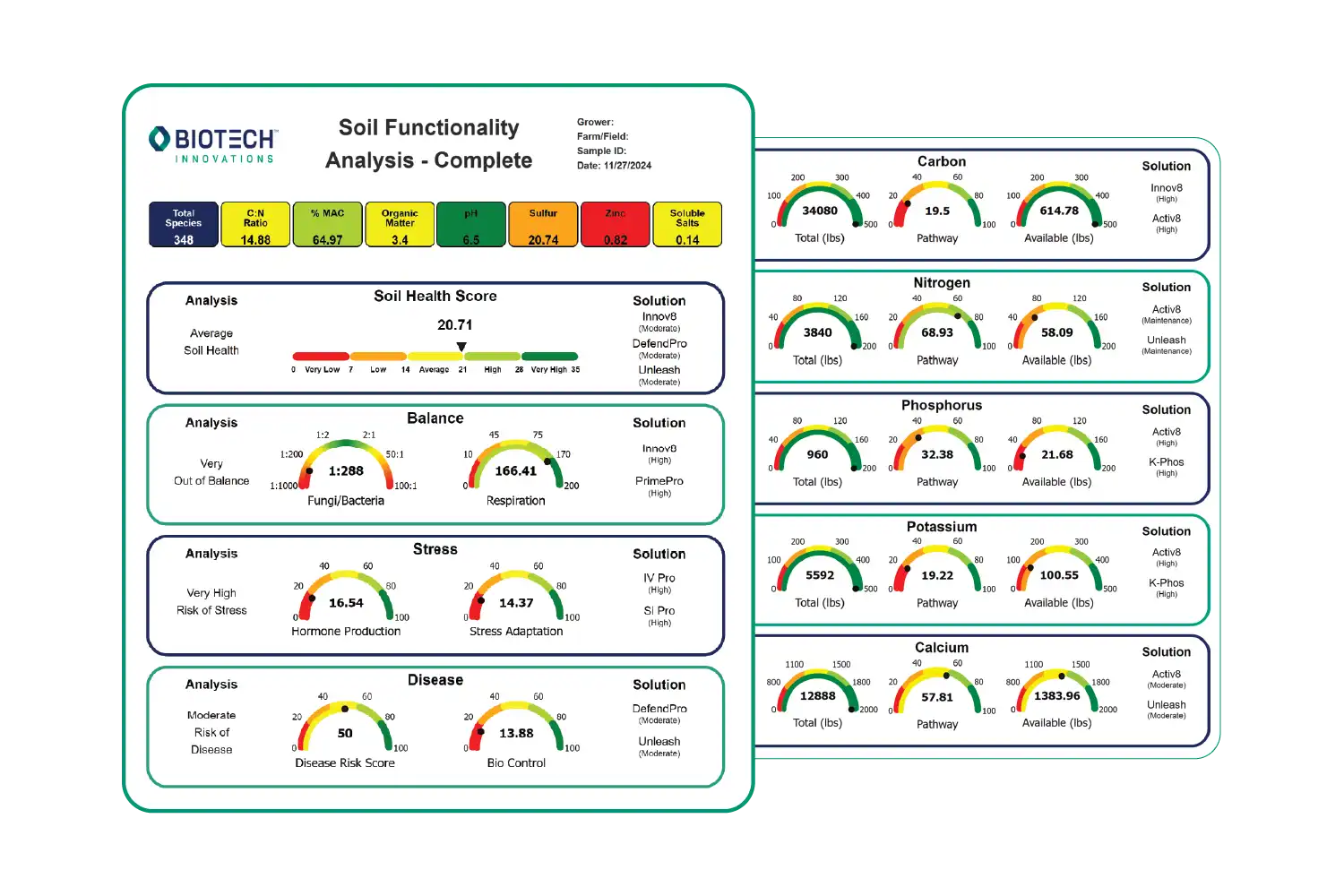
Want to unlock the power in your soil? Then we need to shift the conversation from nutrient inventory to availability. At Biotech Innovations, we spend the first dollar on your farm in the form of a Soil Functionality Analysis, or SFA™ report. Before you invest in products (solutions), it pays to know what the specific problem (limiting factor) is.
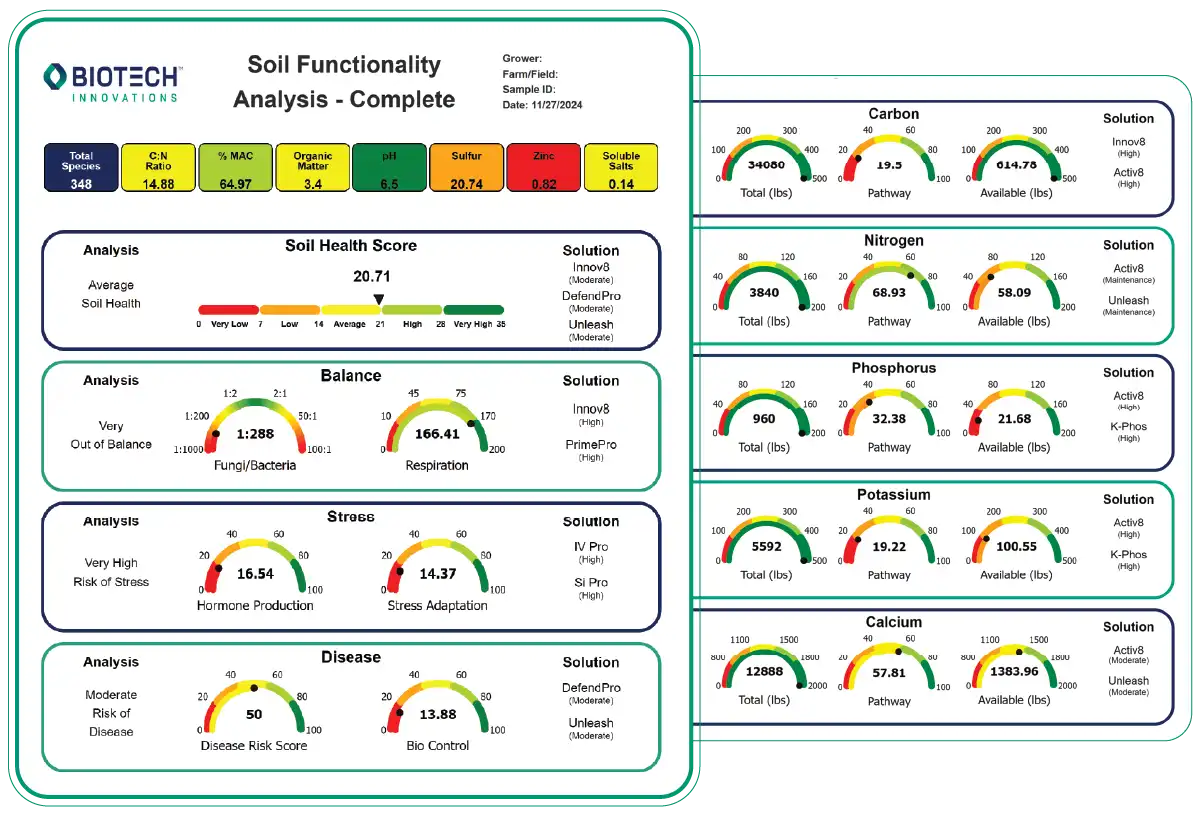
The SFA was developed to answer these questions. Rather than measuring nutrient levels alone, the SFA evaluates how well your soil's biological system is functioning. That biological function ultimately influences nutrient availability, carbon cycling, disease suppression, and overall crop performance.
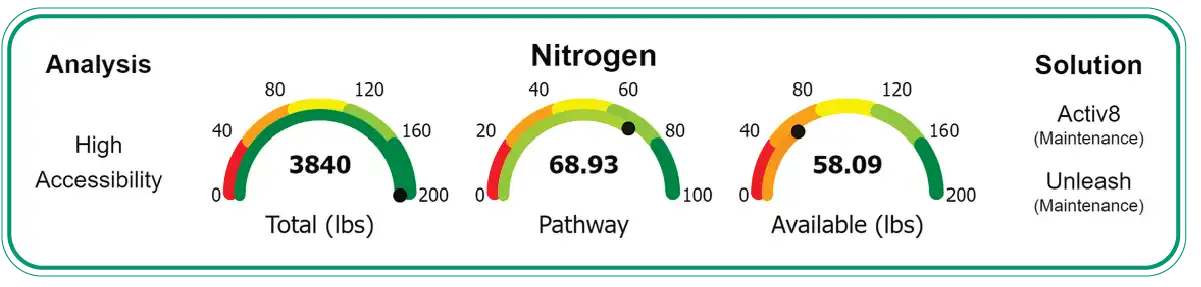
This deeper, more complete understanding allows you to make more informed management decisions for your farm and better identify opportunities to improve your fertility program’s efficiency, your crop’s resilience to stress and disease, and your farm’s long-term soil health.
Read More: A Guide to Your Soil Functionality Analysis Report
If you’re seeing inconsistent results from your current fertility program or are frustrated by the increasing time and effort you spend to combat disease and stress, it’s time to take a closer look at how your soil functions. Your first step? Connect with a Biotech Innovations dealer. Click the link below and we’ll put you in touch. Next, your dealer will coordinate a time to begin the SFA process with you.
Again, we provide this report for your farm at no cost—it’s our investment in your success. After your dealer walks you through your SFA results, he or she will then work with you to identify the best strategy to unlock the nutrients in your soil or tackle your farm’s other soil-related challenges. Together, we’ll Unlock the Power in Your Soil.